Automation in Vulnerability Management: Correcting Vulnerability Prioritization
Automation in Vulnerability Management: Correcting Vulnerability Prioritization
It is an all-too-familiar scene in modern Security Operations Centers (SOCs): A highly qualified security analyst logs into the dashboard of the company-wide vulnerability scanner on Monday morning. The scanner did its work over the weekend, searching the entire network for known security vulnerabilities (CVEs).
The scan result is a report containing 15,000 discovered vulnerabilities. Of these, 3,000 are marked in red and carry the label "Critical" (CVSS score 9.0 to 10.0).
The analyst's reaction is not a drive to take action, but absolute resignation. He knows that the IT operations team has the capacity to patch perhaps 50 servers this week, but certainly not 3,000. How is he supposed to decide which 50 servers are the most important? If he chooses the wrong ones, the company will be hacked. This phenomenon is called Alert Fatigue. It is the main reason why vulnerability management programs fail massively in practice. In this post, we show you how to escape the flood of data and finally prioritize correctly through automation and business context.
The Lie of the CVSS Score
The problem of alert fatigue arises from a fundamental weakness of pure vulnerability scanners: they evaluate the world in isolation.
The criticality of a vulnerability is measured in a standardized way by the CVSS score (Common Vulnerability Scoring System). If a specific software package has a flaw that allows an attacker to gain administrator rights without a password, this flaw receives a CVSS score of 10.0 (Critical). The scanner reports: patch immediately!
However, what the scanner completely ignores is the context of the asset on which this vulnerability exists:
- Scenario A: The vulnerability (CVSS 10.0) is located on the central web server of the online shop, which is open to the internet and generates millions in revenue.
- Scenario B: Exactly the same vulnerability (CVSS 10.0) is located on a decommissioned test server in the development department's lab, which is physically separated from the rest of the network (air-gapped) and contains no sensitive data.
For the pure scanner, both scenarios are equally "critical." For your company, however, Scenario A means potential bankruptcy, while Scenario B is negligible. Those who stubbornly patch according to CVSS scores waste massive resources.
CAASM Provides the Business Context
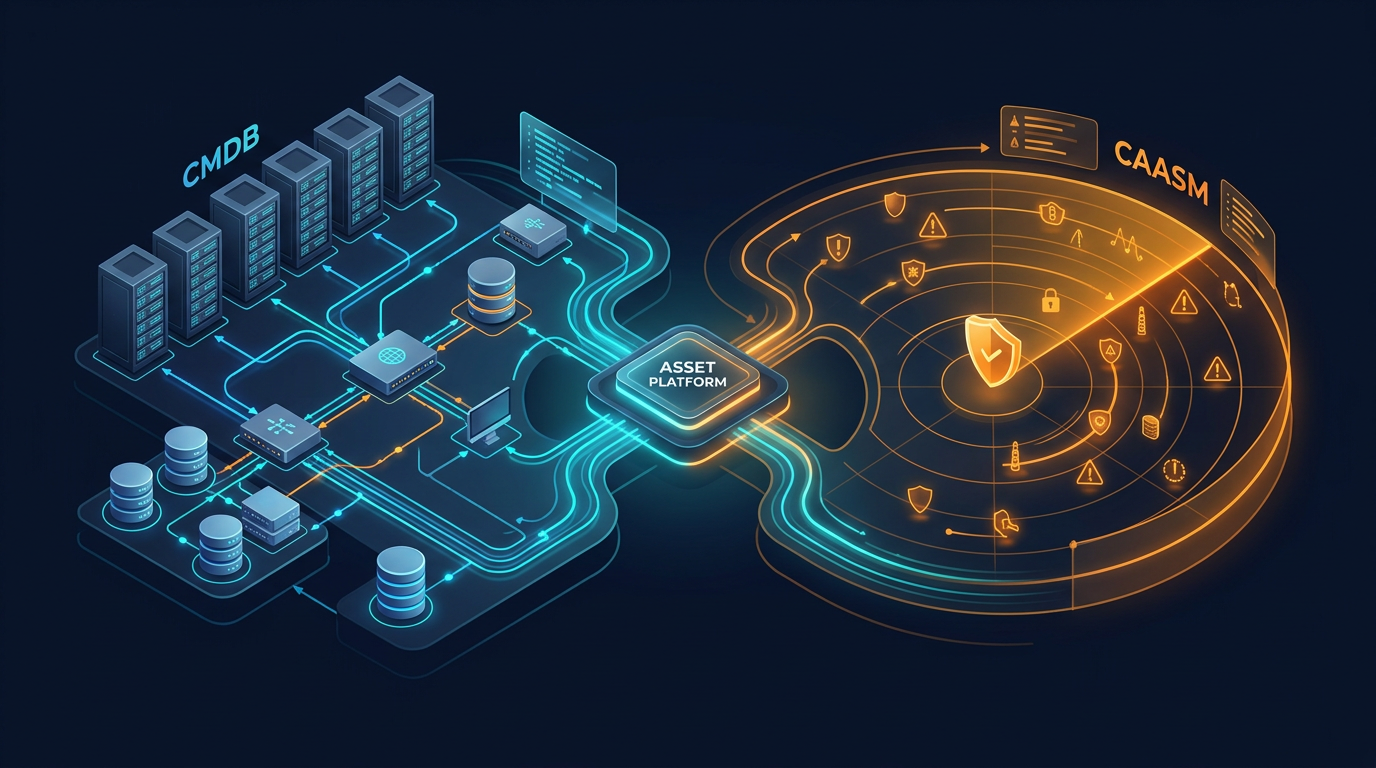
To transform vulnerability management from a blind execution machine into an efficient, risk-based process, you need context. This is exactly where Cyber Asset Attack Surface Management (CAASM), supported by a modern CMDB like Qbilon, plays to its full strength.
CAASM aggregates raw vulnerability data from your scanner and overlays it with the operational and architectural reality of your IT landscape.
The platform automates prioritization based on three crucial vectors:
- Exposure: A vulnerability can only be exploited if an attacker can reach it. Qbilon correlates the vulnerability with network and cloud configurations (security groups, firewall rules). A server with internet access (External Attack Surface) immediately receives the highest priority.
- Business Criticality: Through CMDB integration, the system knows the purpose of the asset. A vulnerability on a server that, according to the ITSM database, supports the "Financial Accounting" process (high protection requirement) is weighted dramatically higher than the same vulnerability on the print server in a branch office.
- Mitigating Controls: Often, a server cannot be patched immediately. The platform automatically checks: Is the patch missing, but is at least an extremely restrictive EDR agent (Endpoint Protection) running on the server that blocks anomalies immediately? If so, the risk is downgraded, and the security team gains time.
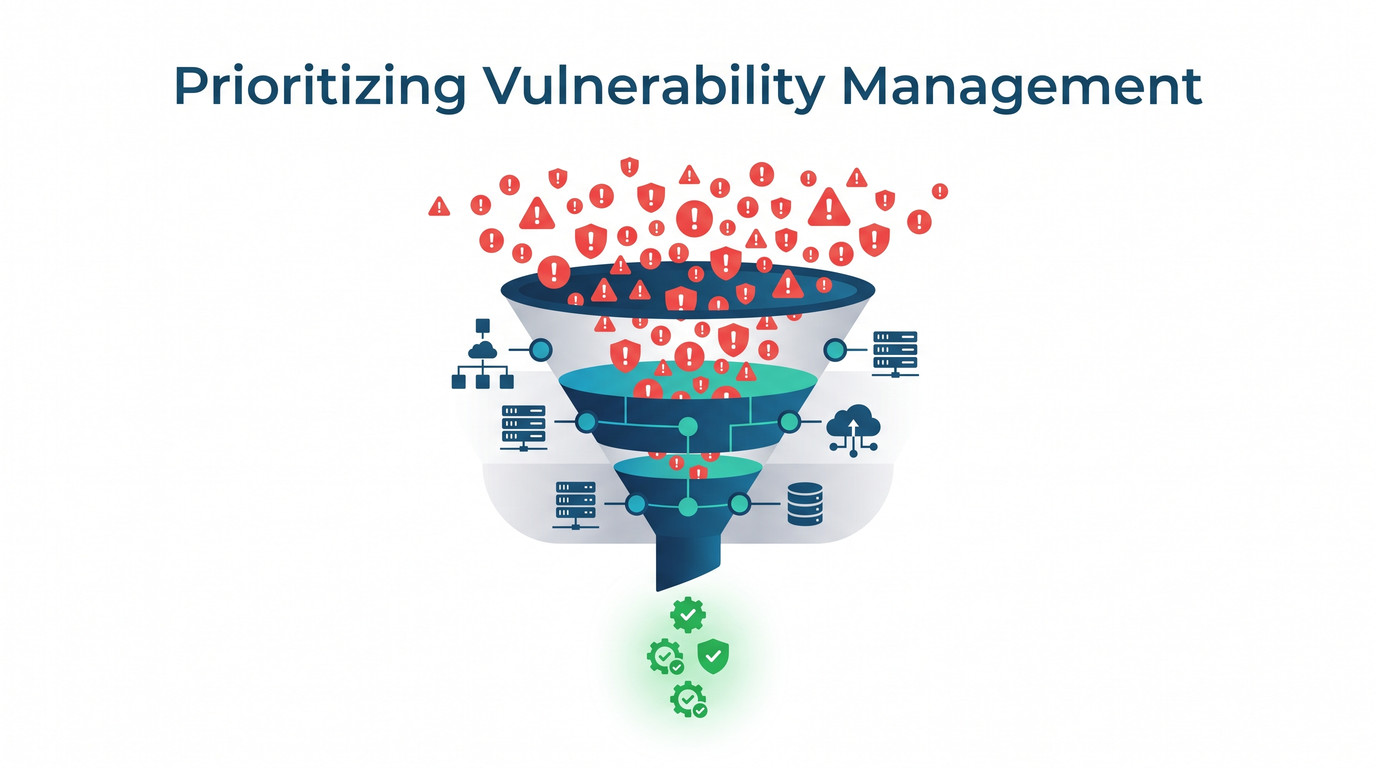
From 3,000 "Critical" to 15 "Existential" Alerts
The magic of automation is shown in the reduction of noise. The algorithm takes the 3,000 "critical" scanner alerts, applies business and network context, and filters relentlessly.
What remains is a top 10 or top 20 list. The security analyst's dashboard no longer says "patch 3,000 servers." It says: "Attention: We have 15 servers that process business-critical customer data, are reachable from the internet, AND have an actively exploitable vulnerability (exploit available)."
These 15 servers can be handed over immediately and in a focused manner to the IT operations team (including knowledge of the responsible asset owner) for remediation.
Conclusion: Stop Scanning, Start Managing
Blindly collecting CVEs does not make your company more secure; it only makes your team tired and frustrated.
To master the threat landscape in 2026, you must view risk in a business context. Automate the reconciliation of your vulnerabilities with your IT architecture. With a CAASM platform, you transform tens of thousands of irrelevant data points into clear, immediately actionable instructions. Deploy your scarce IT resources where they truly save your company from the abyss.