Cyber Asset Attack Surface Management: Best Practices for 2026
Cyber Asset Attack Surface Management: Best Practices for 2026
Cyber Asset Attack Surface Management (CAASM) has evolved from an analyst buzzword into one of the most powerful strategic initiatives for Chief Information Security Officers (CISOs). The promise of CAASM is enormous: eliminating blind spots, tracking down shadow IT, and context-based prioritization of vulnerabilities. It promises to regain control over hybrid, cluttered IT landscapes.
However, as with any transformative technology, simply buying a tool does not automatically lead to success. Implementing CAASM is less a matter of software installation and much more a question of data management and cross-departmental collaboration.
In this article, we summarize the most important Best Practices for the year 2026. We will show you how to successfully launch your CAASM program, avoid classic pitfalls, and sustainably reduce your attack surface.
Best Practice 1: The "Single Source of Truth" as a Foundation (CMDB First)
By far the most common mistake when introducing CAASM is trying to take the second step before the first. Companies rush into aggregating vulnerability data from their security scanners (such as Tenable or Qualys) into a new dashboard without first getting their operational basis – the actual IT asset management – in order.
Why this fails: If a CAASM tool tells you that "IP address 10.0.5.55" is unprotected, but you don't know who owns this IP (Asset Owner) or whether it is a test server or the point-of-sale server (Business Context), you haven't generated any value. You've just created more noise.
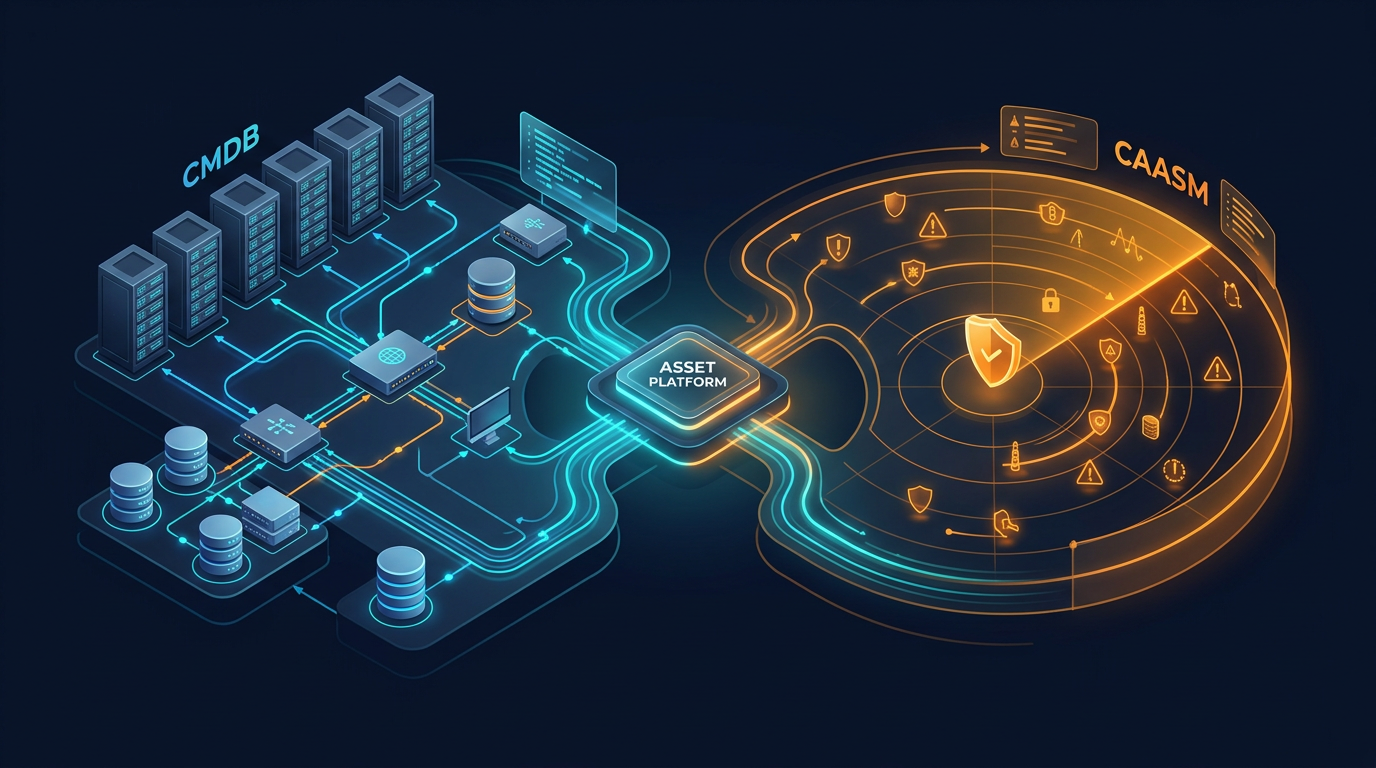
The Best Practice: Always build CAASM on a strong, automated CMDB (like Qbilon). First, you must connect all clouds (AWS, Azure), networks, and virtualization environments via APIs. Only once you have a complete, context-rich inventory of your operational assets should you enrich this with security data.
Best Practice 2: Start by Searching for "Coverage Gaps"
When your CAASM platform goes live and correlates millions of data points, you will likely be overwhelmed by the sheer volume of findings initially. The urge to immediately patch all identified vulnerabilities leads to team burnout.
The Best Practice: Ignore the vulnerabilities (CVEs) for the first few weeks and focus exclusively on Security Coverage Gaps. Your expensive security tools (like the CrowdStrike EDR agent or the vulnerability scanner) work perfectly – but only where they are actually installed! Use CAASM to answer the simple question: "Which running systems (e.g., in the cloud) currently have no active security agent?" Closing these gaps (deploying agents to blind spots and shadow IT) is the fastest and most effective way to immediately and massively reduce your attack surface (Quick Win).
Best Practice 3: API Integrations Instead of Agent Chaos
We have already touched on this, but it cannot be repeated enough: do not try to run CAASM by deploying even more software agents on your servers ("Agent Bloat").
The Best Practice: A top-tier CAASM architecture is agentless. It uses standardized interfaces (APIs) to pull data directly from the management consoles of your existing IT and security tools (cloud providers, identity providers, ITSM systems). This preserves the performance of your production servers and guarantees 100% coverage, as assets cannot hide from cloud APIs.
Best Practice 4: Automate Remediation
The realization alone that an asset is vulnerable does not make your network more secure. Security is only created when the error is fixed. If CAASM only leads to security analysts manually writing emails to administrators ("Please patch Server 04"), you will suffocate in administrative processes.
The Best Practice: Leverage the integration capabilities of modern platforms. When Qbilon (CAASM) detects that a cloud storage (S3 Bucket) is unencrypted and publicly accessible, the platform should automatically create a ticket in the ITSM tool (e.g., Jira or ServiceNow). This ticket immediately contains the name of the responsible asset owner (from Active Directory), the exact path to the asset, and the instruction for action. This is how you transform passive monitoring into active, measurable security processes.
Conclusion: CAASM is a Lever, Not a Band-Aid
CAASM is not just another security tool that you put in a corner of the network and forget about. It is the lever that makes all your other security investments (firewalls, scanners, EDR) efficient and effective across the board in the first place.
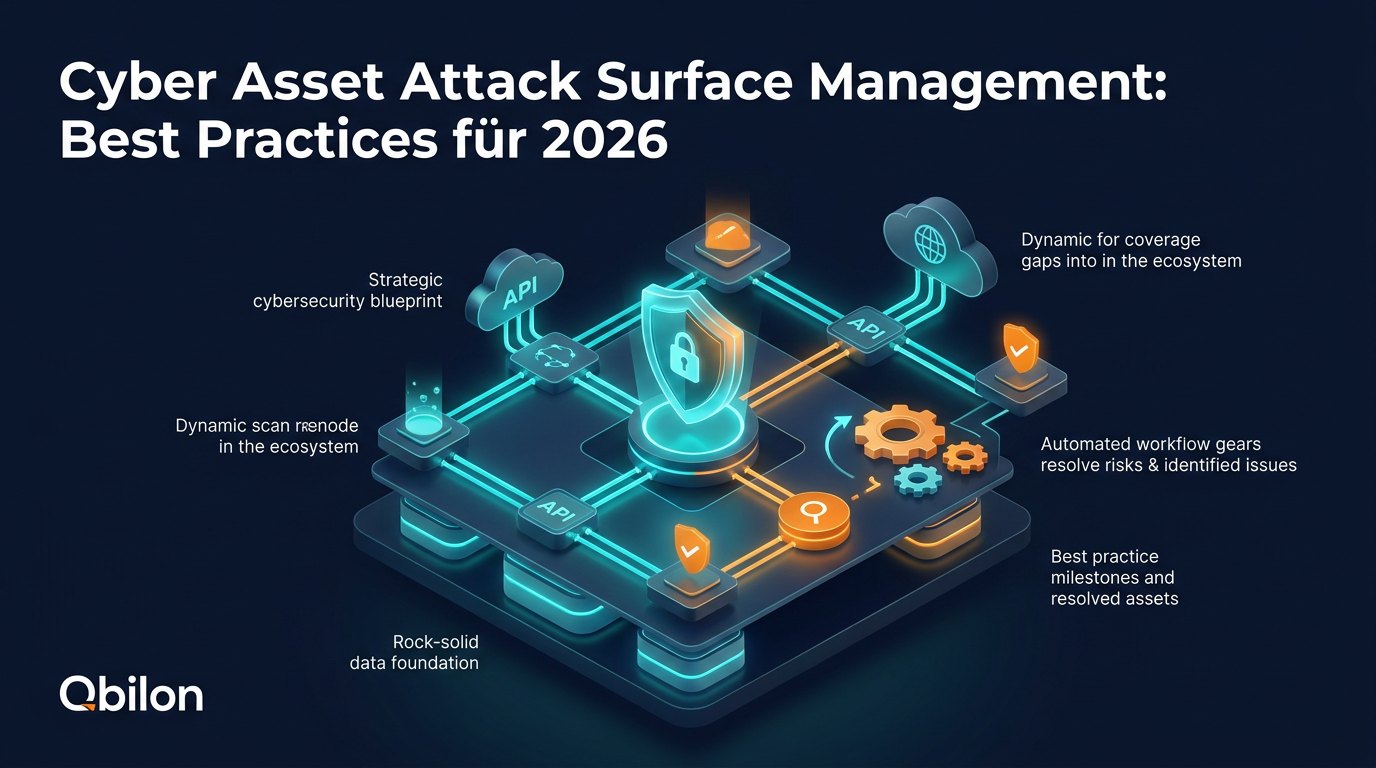
If you follow these best practices – building a strong CMDB foundation, avoiding agents, focusing on coverage gaps, and automating workflows – you will end asset chaos in your company permanently. You will regain strategic control over your attack surface and leave attackers no room for nasty surprises.