What is CAASM? Cyber Asset Attack Surface Management Explained Simply
What is CAASM? Cyber Asset Attack Surface Management Explained Simply
In the world of IT security, hardly a year goes by without a new, complicated acronym. While concepts like EDR (Endpoint Detection and Response) or IAM (Identity and Access Management) have long become standard repertoire, a new term is currently dominating the budgets and strategy papers of CISOs worldwide: CAASM.
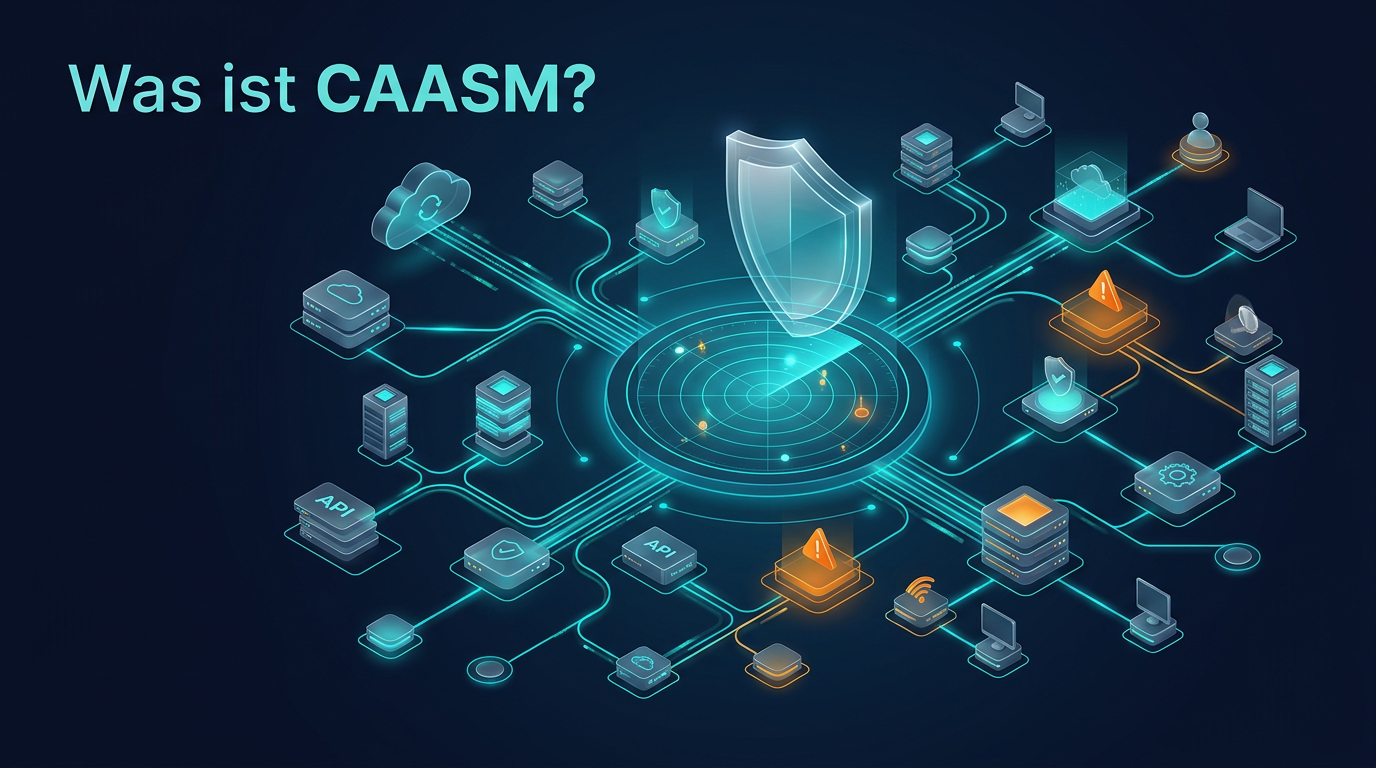
CAASM stands for Cyber Asset Attack Surface Management. Gartner, one of the world's most influential IT research firms, has officially defined this category and describes it as one of the most important growth areas in cybersecurity. But beyond the analyst jargon: What exactly is hidden behind it? How does it work in practice? And why does it solve problems that traditional security solutions have failed to address so far?
In this post, we break down the bulky acronym into its individual parts and explain in a simple and understandable way how CAASM works and why it will fundamentally change your defense strategy.
Breaking Down the Term
To understand CAASM, let's look at the three essential building blocks of the name:
- Cyber Asset (The Target Object) In the past, people spoke of "IT assets" and usually meant physical things: laptops, servers, switches. The term "Cyber Asset" in CAASM goes far beyond that. It includes absolutely everything that exists in a digital infrastructure and could potentially be exploited by an attacker. This includes hardware and virtual machines, but above all cloud configurations, SaaS licenses, external APIs, SSL certificates, user identities (user accounts), and even code repositories (like GitHub). CAASM does not view IT from the perspective of an accountant, but from the perspective of a hacker.
- Attack Surface (The Entry Point) The attack surface is the sum of all vulnerabilities, misconfigurations, and entry points in these cyber assets through which an unauthorized user could penetrate the system or extract data. Due to rapid migration to the cloud, remote work concepts, and the involvement of third-party providers (supply chain), this attack surface has become extremely fragmented and huge in most companies. It is dynamic – it grows and shrinks with every server that is spun up or deleted.
- Management (The Control) Management in this context does not just mean passively "displaying" problems, but active, continuous monitoring and control. It is about systematically reducing the attack surface, prioritizing security gaps, and initiating automated workflows for remediation.
How Does CAASM Work Technically?
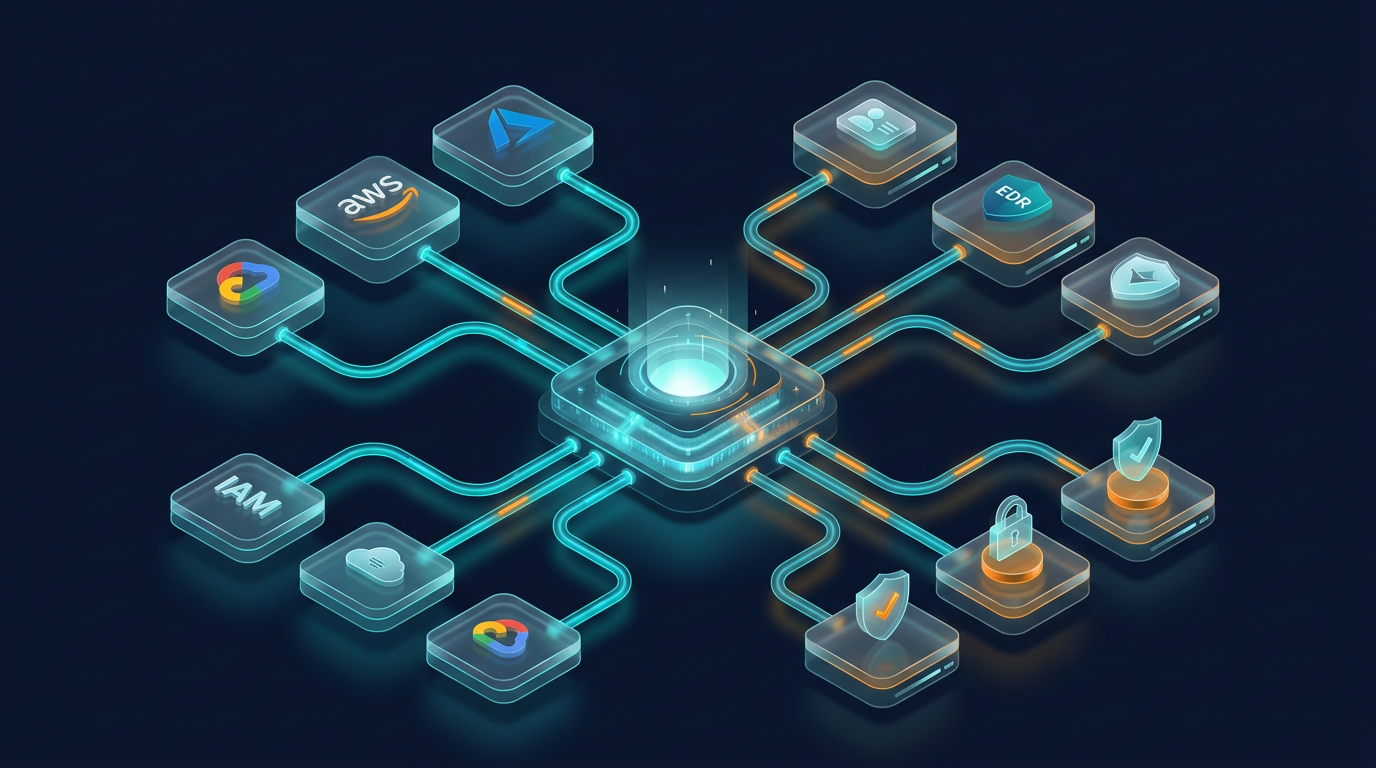
The revolutionary approach of CAASM is that it does not install its own agents on your servers and does not perform its own network scans. Instead, it utilizes the massive amounts of data that are already dormant in your existing tools.
A CAASM platform connects via API interfaces to all your operational and security-relevant systems. For example:
- AWS, Azure, Google Cloud (Infrastructure data)
- VMware, Active Directory (On-premise systems and identities)
- CrowdStrike, Microsoft Defender (Endpoint security)
- Tenable, Qualys (Vulnerability scanners)
- Jira, ServiceNow (Ticketing and ITSM)
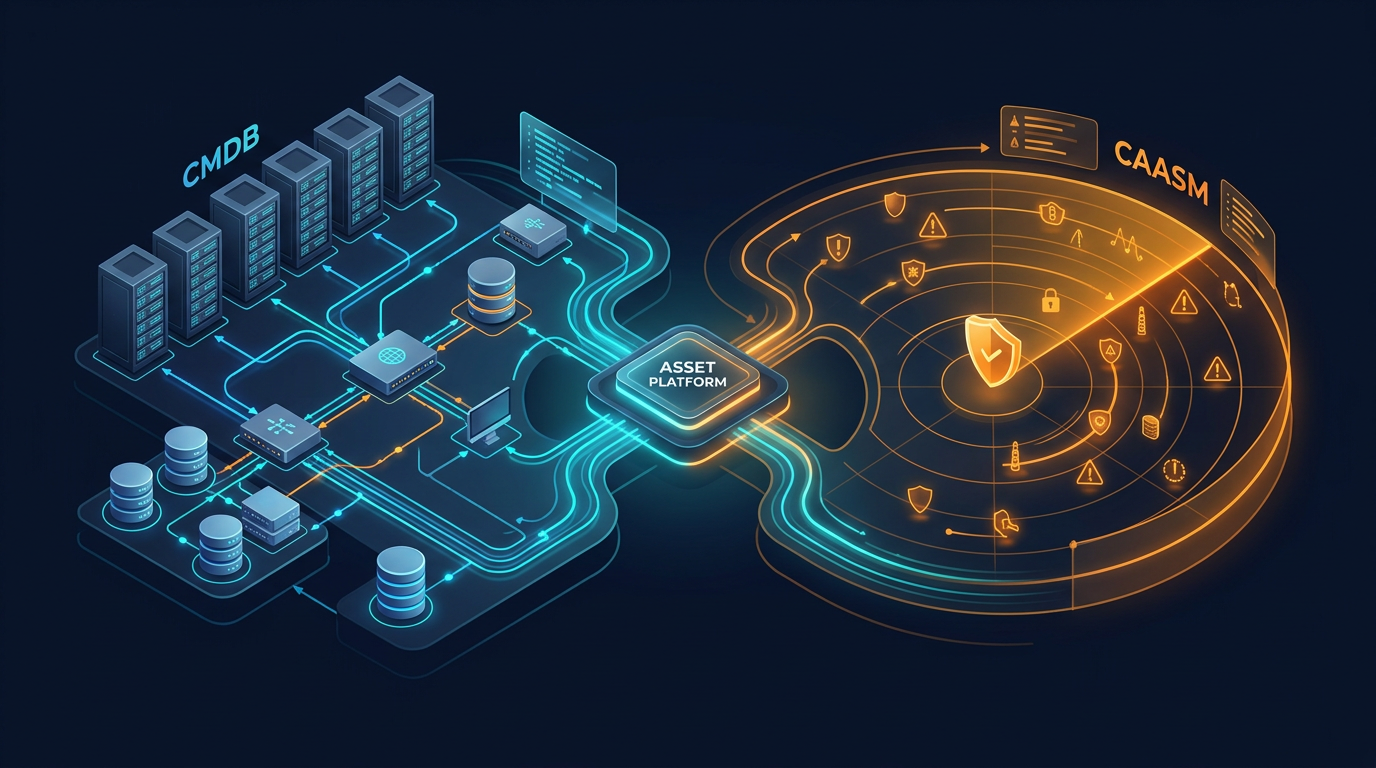
The CAASM Process: The platform pulls data from all these sources (often dozens of tools) and performs intelligent data correlation. It overlays the different "truths" and searches for discrepancies, known as "coverage gaps."
The Three Classic CAASM Use Cases
To make the value of CAASM tangible, here are three classic scenarios that would require weeks of manual analysis without CAASM, but light up on the dashboard in seconds with CAASM:
Use Case 1: The Missing Security Agent (Security Coverage Gap)
Your company has a policy that the SentinelOne agent must run on every server. CAASM pulls the list of all running virtual machines from AWS and Azure (1,000 servers). It pulls the list of all active agents from the SentinelOne console (950 servers). CAASM immediately shows you the 50 servers running in the cloud that are not protected by your expensive security tool. The attack surface becomes visible instantly.
Use Case 2: Risky Shadow IT
A development team is using a new SaaS application for project management without authorization. CAASM analyzes Active Directory login data and firewall outbound network traffic. It identifies that 20 company accounts are regularly communicating with an unknown cloud app. The SOC can intervene immediately before sensitive data is uploaded.
Use Case 3: Risk-Based Vulnerability Prioritization
Your scanner reports 10,000 critical vulnerabilities. CAASM enriches this raw scanner data with business context from the CMDB and network rules from the cloud. The result: "Only 15 of these vulnerabilities are on servers that process business-critical data AND are simultaneously reachable from the public internet." 10,000 unsolvable problems become 15 concrete, immediately solvable tasks.
Conclusion: Enlightenment Instead of Flying Blind
CAASM is the logical answer to the question of how to manage cybersecurity in complex, hybrid networks at all. It is the end of flying blind. Instead of buying more isolated security tools, CAASM uses existing data to bring light into the dark corners of your infrastructure.
With the move toward CAASM, Qbilon is evolving from a compliance and audit enabler to the ultimate command center for your IT security. Those who know and actively manage their attack surface take away a hacker's greatest advantage: the element of surprise.