The Modern CMDB: Dynamic, Integrated, and Highly Automated
The Modern CMDB: Dynamic, Integrated, and Highly Automated
Anyone working in the IT industry over the last fifteen years has probably heard the "death of the CMDB" announced half a dozen times. Analysts wrote fiery articles about why the concept of the Configuration Management Database had failed. IT managers cursed multi-million dollar implementation projects that took years and ended up producing only an outdated database full of dead entries.
In fact, the classic CMDB – a construct from the early ITIL V3 era – was doomed to fail in today's modern, agile world. It was designed for humans to manually type data into forms. This concept was bound to collapse when faced with cloud instances that exist for only a few hours.
But reports of its death have been greatly exaggerated. In 2026, we are witnessing a massive renaissance of the CMDB. Fueled by strict regulations such as NIS-2 and the bitter realization that cybersecurity is impossible without inventory knowledge (CAASM), IT documentation is suddenly back at the top of the priority list.
However, the CMDB being implemented today has nothing to do with its failed ancestor. In this post, we dissect the anatomy of the modern CMDB and show why its dynamics, integration, and automation make it the indispensable heart of modern enterprise IT.
Pillar 1: Agentless API-First Discovery (The Death of Manual Maintenance)
The fundamental design flaw of the classic CMDB was its dependence on the human factor or on cumbersome software agents.
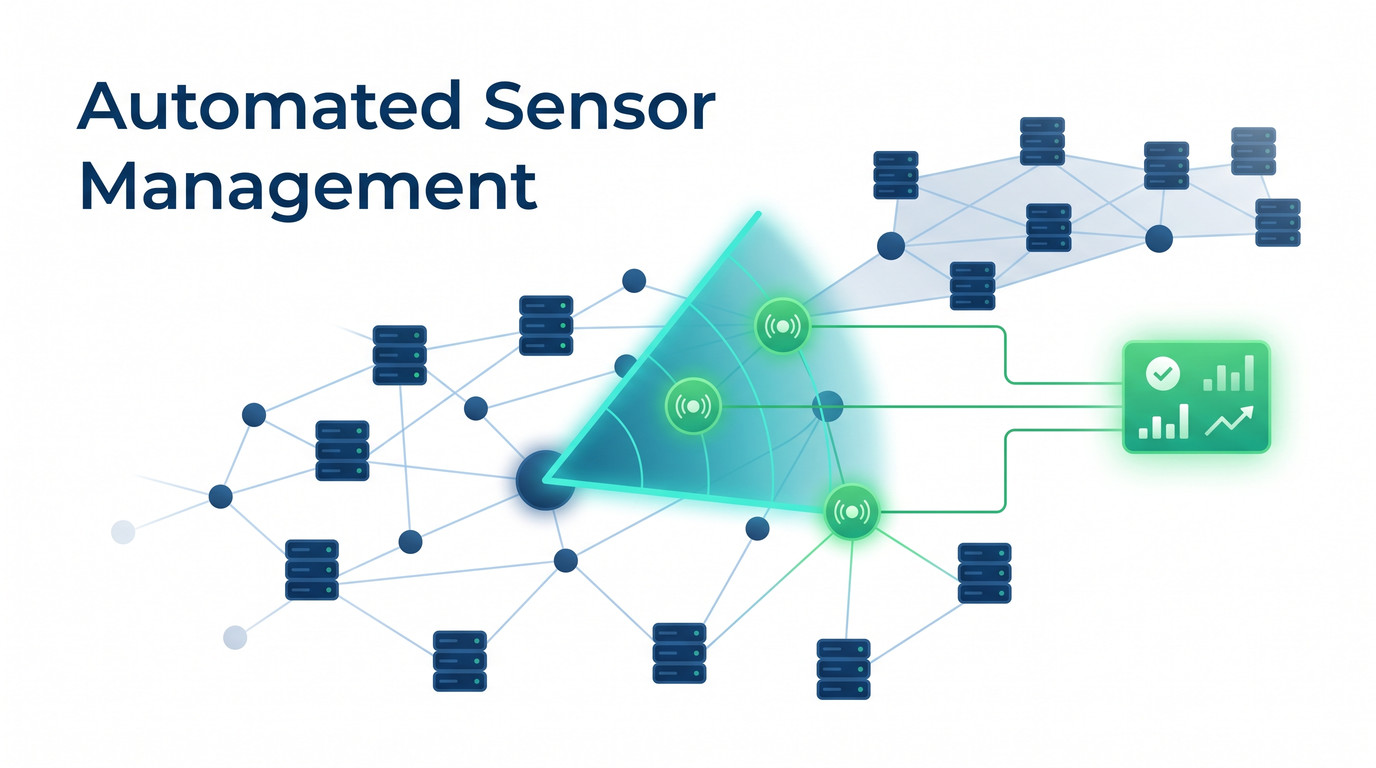
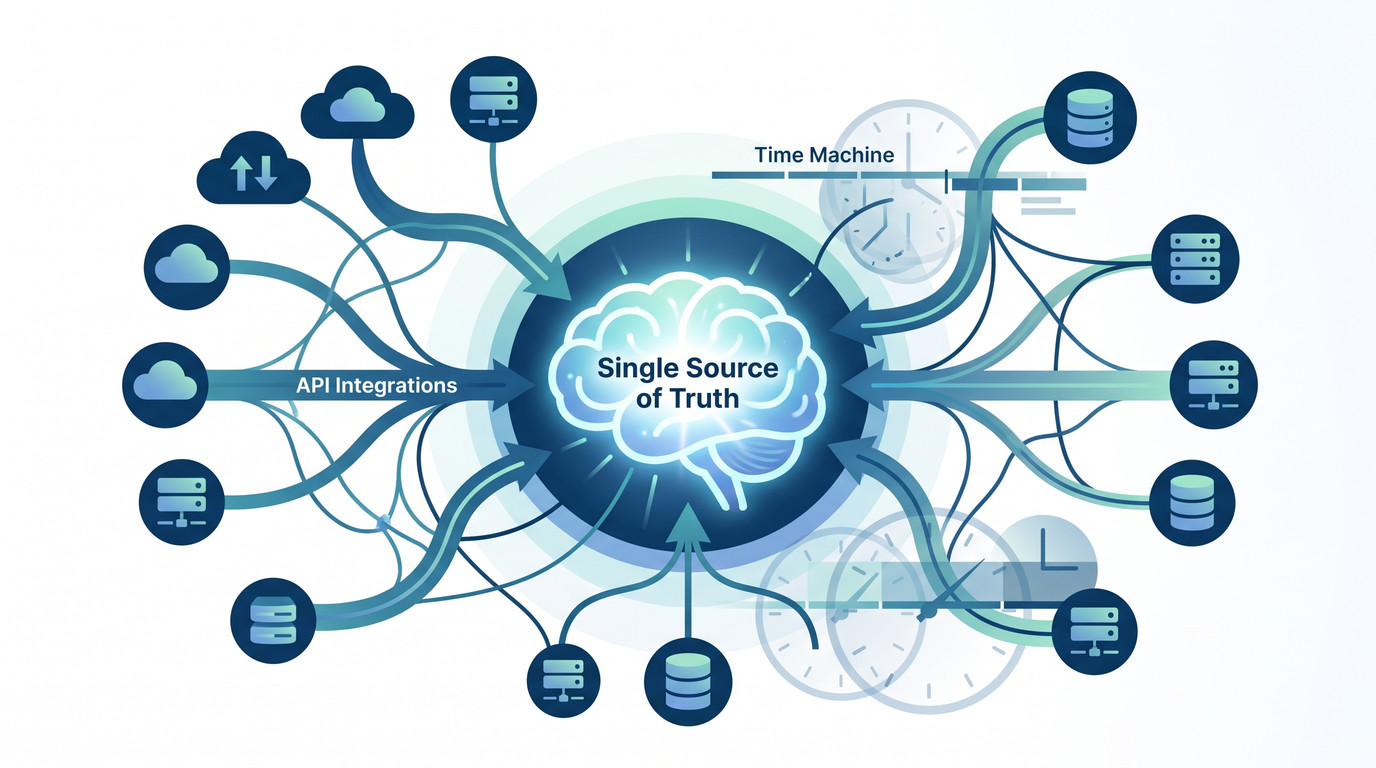
The modern CMDB, as represented by the Qbilon platform, flips this principle. It is "API-First." It doesn't ask administrators to enter data. It goes to where the data is created. Via pre-built connectors, it hooks into the management layers of the IT landscape: in AWS, Azure, Google Cloud, VMware vCenter, in Kubernetes clusters, in Active Directory, and in the dashboards of network switches.
The CMDB pulls raw data in real-time (or at very short intervals). This means: when a developer provisions a new web server, that server appears fully inventoried in the CMDB just a few seconds later. The database is always an exact, incorruptible reflection of operational reality.
Pillar 2: Intelligent Normalization (Turning Noise into Knowledge)
Simply sucking up data via APIs is not enough, however. A large company uses dozens of tools, and each tool speaks its own language:
- AWS calls an asset an "EC2 Instance" and identifies it via a long ID number.
- The security tool (e.g., Tenable) only sees an "IP address 10.0.5.55" and finds a vulnerability on it.
- The ITSM tool (ServiceNow) lists an "Application Server" named "SRV-WEB-04" for accounting.
A modern CMDB is a normalization machine. Its algorithms recognize that the AWS instance, the IP address, and the application server are one and the same physical (or virtual) object. It merges these fragmented data points into a single, "golden" record. This turns unstructured data noise into real, actionable knowledge.
Pillar 3: Real-Time Dependency Mapping (The Business Context)
A database that only tells you that you own 500 servers is a dumb list. The true value for IT Operations Management (Root Cause Analysis during outages) and for the security team (risk prioritization) lies in the relationships between assets.
The modern CMDB maps these dependencies (Dependency Mapping) automatically, often based on the analysis of network traffic or configuration data. It builds a web: Server A talks to Database B. Database B runs on Storage Volume C. All these components support the business process "Online Checkout."
If Storage Volume C fails (or is hacked), the CMDB immediately shows the CIO that the online checkout is affected. This business context saves crucial minutes and hours during IT crises.
Pillar 4: The Time Machine (Historization for NIS-2)
The most important innovation in CMDB evolution, however, is the fourth dimension: time. Classic systems simply overwrote the old value during an update (e.g., a changed IP address). The past was deleted.
As we emphasize in almost every post, this is a fatal deficit in the era of Continuous Compliance and NIS-2. Auditors demand evidence for the past. The modern CMDB is a time-series database. It remembers every single change, no matter how small, with a cryptographically secure timestamp. It is the memory of the company. If you need to know what your architecture looked like on March 14th, the CMDB provides this image at the push of a button ("Push-Button Evidence").
Conclusion: The Central Nervous System of IT
The era of dusty ITIL databases is over. Companies that still try to manage their hybrid cloud world with manual Excels or rigid legacy systems are heading toward a loss of control.
The modern, dynamic CMDB is no longer a bureaucratic documentation tool. It is the central nervous system that makes cloud management (FinOps), Cyber Asset Attack Surface Management (CAASM), Enterprise Architecture (EAM), and compliance (NIS-2) possible in the first place. Invest in an automated "Single Source of Truth" – it is the foundation on which the future of your IT is built.