How IT Leaders Master the Balancing Act Between Innovation and Security
How IT Leaders Master the Balancing Act Between Innovation and Security
In the executive suites of modern companies, a strategic tug-of-war takes place almost daily. On one side, the Chief Information Officer (CIO) or Chief Technology Officer (CTO) pulls. His mandate: innovation and speed. The competition never sleeps. The company must establish new digital business models, launch apps in record time, accelerate cloud migration, and promote agile DevOps methods. Every process that slows down developers costs real money and market share.
On the other side of the rope pulls the Chief Information Security Officer (CISO) or the compliance officer. His mandate: security, stability, and risk mitigation. With the NIS-2 directive at his back, the threat of million-euro fines for GDPR violations, and the constant danger of ransomware attacks, he demands control. He wants every new technology to be tested, documented, and secured before it goes into production.
For a long time, an unwritten law applied in IT: You can either be fast and innovative, or you can be secure and compliant. Both at the same time is impossible. In this post, we show why this either-or thinking is outdated in 2026 and how data-driven companies are not only mastering this balancing act but merging innovation and security into a driving symbiosis.
The Braking Blocks of the Old IT World
Why do security and compliance often feel like brakes? It’s because of the instruments traditionally used to exercise control: manual processes and bureaucratic gates.
When a developer team in a classic organization needs a new database server in the cloud to test an innovative AI feature, they have to open a ticket in IT Service Management (ITSM). This ticket goes to the network department (for IP assignment), the security department (for firewall approval), and the compliance manager (for entry into the manual CMDB). The process often takes three to four weeks.
The developers are frustrated, innovation stalls. The logical—and highly dangerous—consequence is the emergence of Shadow IT. The developers pull out the company credit card, rent their own uncontrolled cloud environment, and build their feature there. Innovation has won, but security has lost all along the line.
The Philosophy of Guardrails
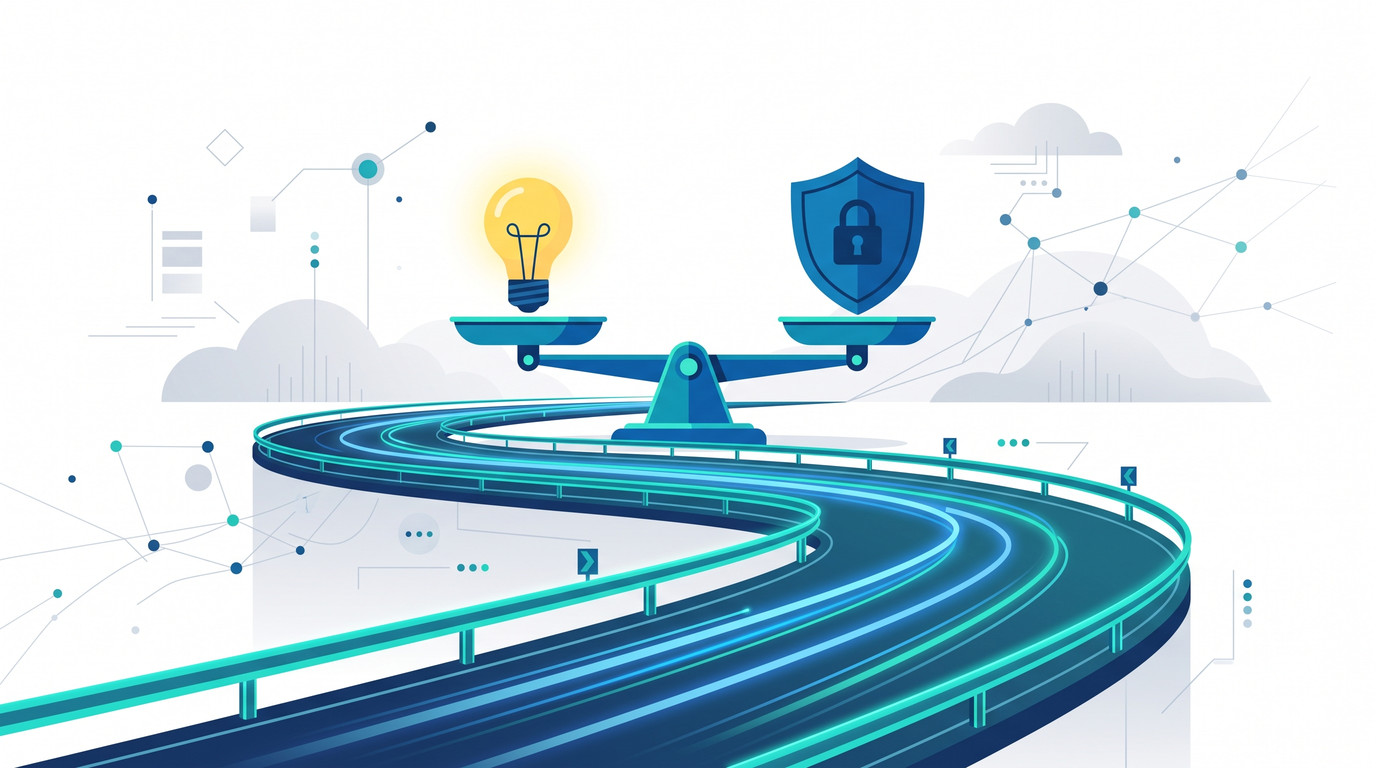
To resolve this conflict, we must change the paradigm of control. We must move away from the concept of "gates" and switch to the concept of "guardrails."
Imagine a highway. If you want cars to get from A to B safely, you could set up a gate every 100 meters where every car has to stop and be checked. That is 100% secure, but traffic stands still (the traditional ITSM model). Or you build an excellent, well-lit highway with extremely stable guardrails at the edges. The cars can drive at 200 km/h (innovation). As long as they stay on the road, you don't interfere. Only when a car threatens to drift off the lane and crash into the guardrail do you intervene (the modern security model).
Automated Visibility as a Guardrail
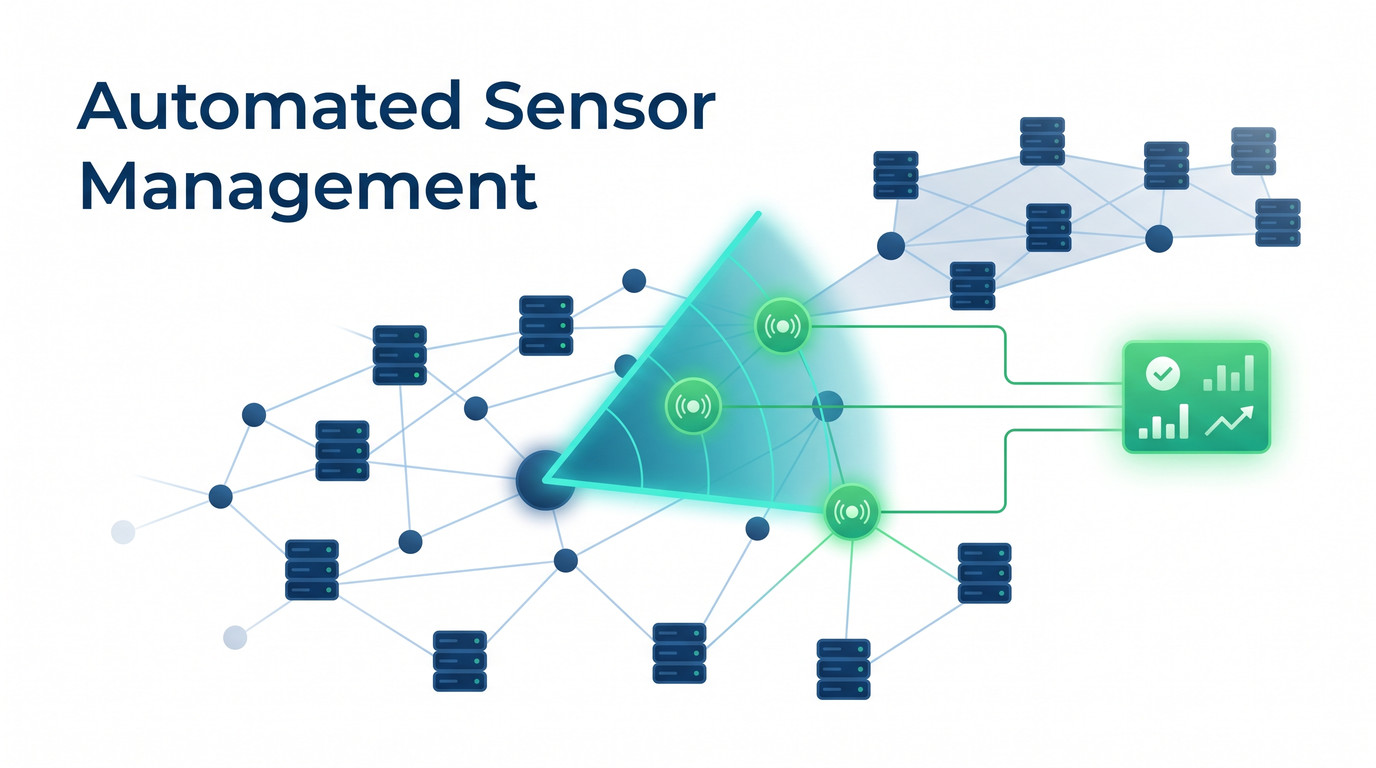
How do you build such guardrails in IT? The answer lies in radical, automated visibility and the enforcement of policies (rules) in real-time. This is where a Unified Asset Data platform like Qbilon comes into play.
If you want to combine innovation and security, give your developers the freedom to provision resources in the cloud independently (via Infrastructure as Code). You remove the manual approval tickets.
At the same time, you let a platform like Qbilon run in the background. This platform is your guardrail. It integrates directly into the cloud (AWS, Azure) and your security tools via APIs.
The interaction in practice:
- The developers spin up 50 new containers for the AI feature on Tuesday afternoon. (Innovation: Check)
- Qbilon detects these 50 containers in milliseconds via the cloud API and automatically inventories them in the central CMDB. No one has to fill out an Excel list. (Documentation: Check)
- At the same moment, Qbilon automatically checks the security policies (Policy as Code). The policy states: No container may have public IP addresses.
- If the developers have made a mistake and a container is publicly accessible (the car is about to hit the guardrail), the system immediately sounds an alarm or triggers an automated workflow that isolates the container. (Security: Check)
Conclusion: Trust through Transparency
The balancing act between agility and regulation (like NIS-2) cannot be solved by more forms, more meetings, or stricter bans. The solution is technology that can keep up with the pace of innovation.
Security must no longer be a manual bottleneck. If you know exactly what is happening in your network, who is doing it, and whether it complies with the rules at all times through automated asset management, you can grant your teams maximum freedom. True innovation thrives best in an environment where the safety net is so dense and automated that a fatal crash becomes technically almost impossible. Make security the invisible enabler of your business success.