Integrating Security Tools: Why APIs Are the Heart of CAASM
Integrating Security Tools: Why APIs Are the Heart of CAASM
The toolbox of a modern Chief Information Security Officer (CISO) is packed. According to industry studies, large enterprises use an average of 40 to 70 different security tools. There are solutions for endpoint protection (EDR), identity management (IAM), vulnerability management, Cloud Security Posture Management (CSPM), network detection and response (NDR), and firewalls.
Despite these massive investments in technology, many security teams feel overwhelmed. The problem is not a lack of tools, but a lack of cohesion. The tools work in isolation. Each dashboard tells its own fragmented version of the truth.
To end this chaos and bring the concept of Cyber Asset Attack Surface Management (CAASM) to life, a technological bridge is needed to break down these silos. This bridge is called the API (Application Programming Interface). In this post, we explain why API integrations are the only scalable path to a "Single Source of Truth" and why the classic approach—deploying software agents—has had its day in the CAASM context.
The Curse of "Agent Bloat"
In the past, when IT companies wanted to create transparency, they resorted to a simple method: they installed a small piece of software (an agent) on every endpoint and server. The agent collected data (e.g., installed software, open ports) and sent it to a central server.
For basic IT Asset Management (ITAM) in local data centers, this worked for a long time. In today's world of hybrid clouds and complex security architectures, however, this approach leads to a dead end known as "Agent Bloat":
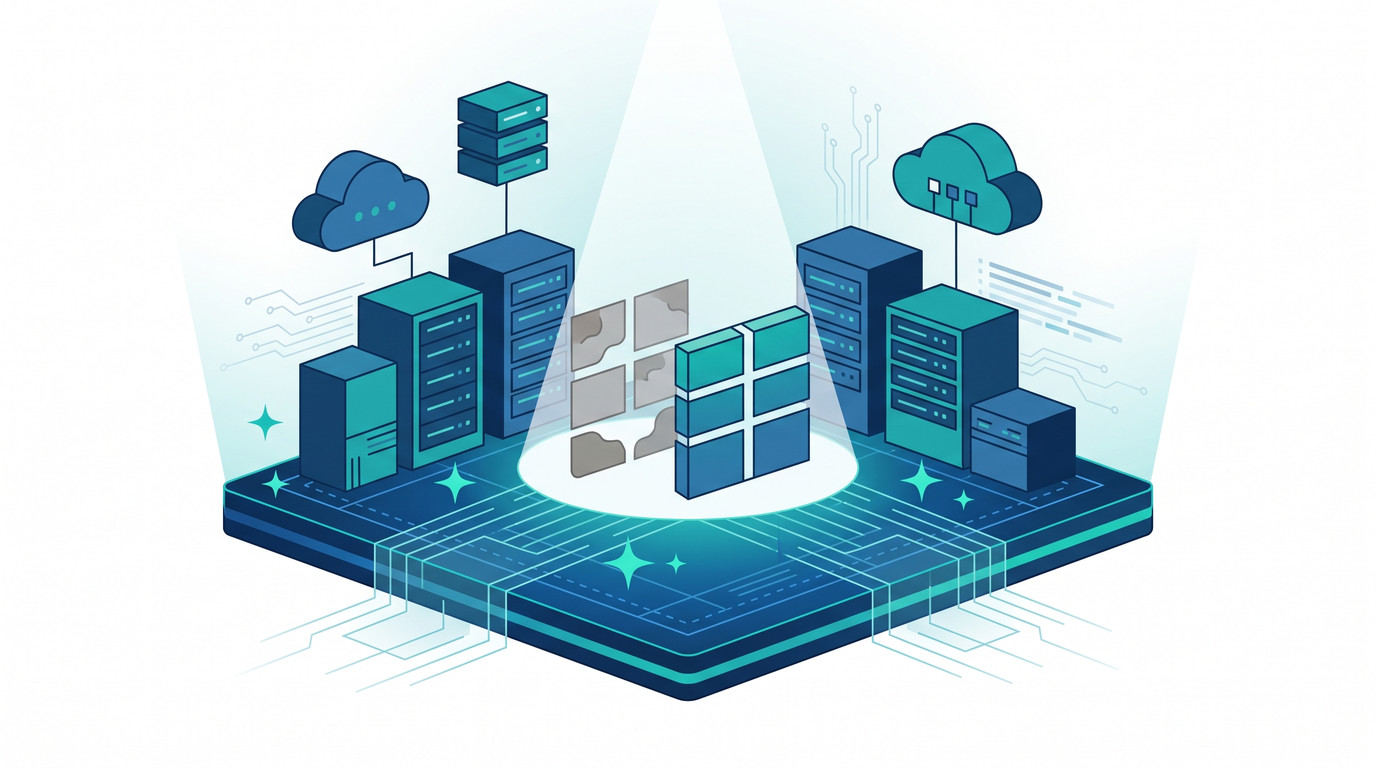
The Gap in the System: An agent can only provide data from the systems on which it was successfully installed. What about the server a developer spins up in AWS and "forgets" to install the agent on (Shadow IT)? That server does not exist for the agent network.
Performance Issues: When five agents for ITAM, EDR, backup, logging, and performance monitoring run simultaneously on a database server, they compete for CPU and RAM. This destabilizes business-critical systems.
OT Incompatibility: As previously discussed, installing agents on sensitive industrial control systems (IT-OT convergence) is often technically impossible or prohibited by the manufacturer.
APIs: The Silent Data Revolution
The core of CAASM is the realization that the required data already exists. It doesn't need to be collected by new agents on the servers; it is already residing in the management systems of cloud providers and security tools.
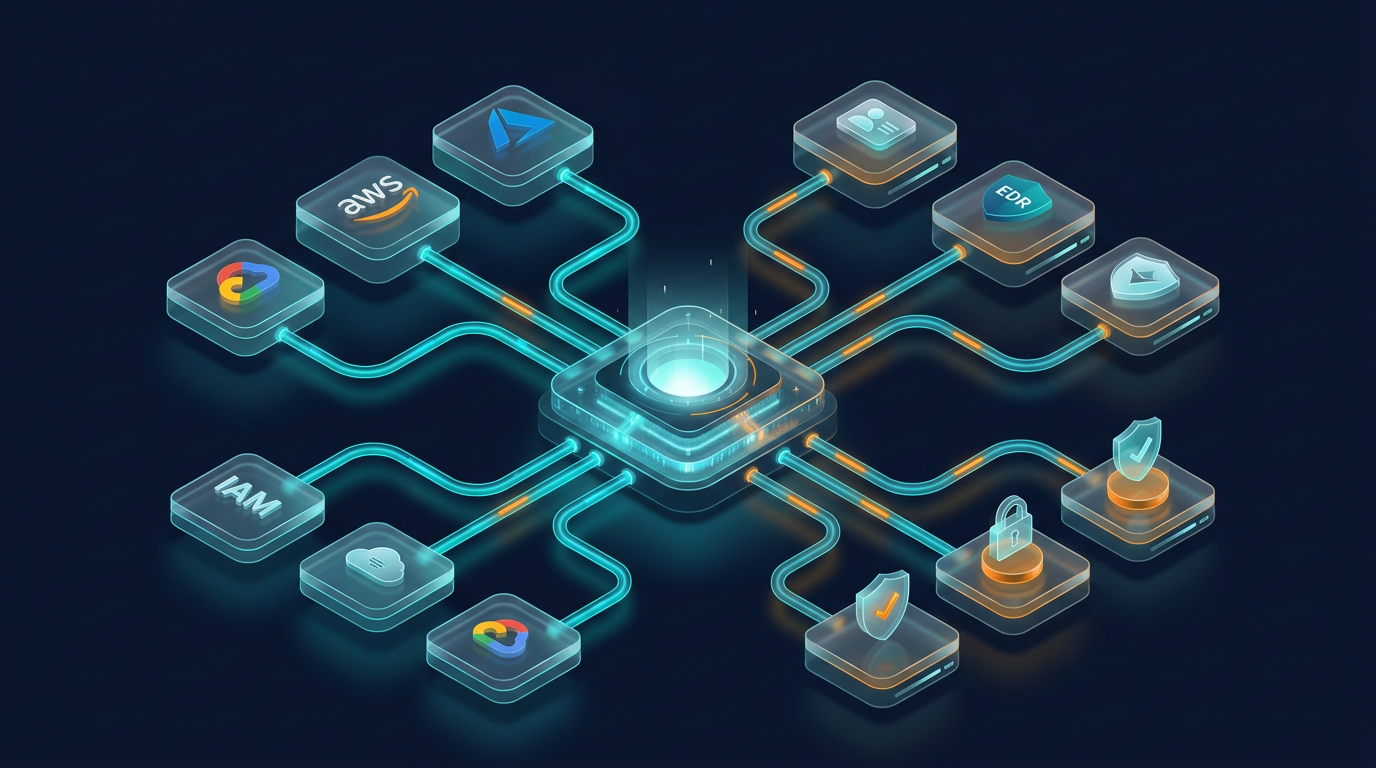
The solution is the use of APIs (interfaces). A modern asset data platform like Qbilon does not communicate with individual servers, but directly with the "brains" of the infrastructure:
The Infrastructure API: Qbilon asks the AWS or Azure API: "Give me a list of all currently running virtual machines and their configurations." The cloud API responds in milliseconds, regardless of whether agents are installed on those machines or not.
The Identity API: The platform asks the Active Directory (Entra ID): "Who are the active users and what permissions do they have?"
The Security API: Qbilon asks the EDR system (e.g., CrowdStrike): "Which endpoints are you currently protecting and what is their status?"
This API-driven (agentless) approach is silent, does not affect system performance, and—most importantly—captures 100% of the landscape. A server can hide from an agent, but it cannot hide from its cloud provider's billing API.
The Magic of Data Correlation
However, simply collecting data via APIs (data ingestion) is only the first step. The true power of CAASM unfolds in the correlation of these data streams.
Let's take a classic example of uncovering a security gap (Security Coverage Gap):
The AWS API reports: We have 1,000 active EC2 instances.
The CrowdStrike API reports: I am currently protecting 950 EC2 instances.
The ServiceNow API reports: There are 800 documented servers in the ITSM database.
A CAASM platform like Qbilon layers these three data points (normalization and deduplication). The algorithm immediately recognizes the discrepancies and sounds the alarm: "Warning: There are 50 instances in AWS that have no antivirus protection (CrowdStrike). Furthermore, 200 instances in AWS are not documented in the official ITSM tool at all (Shadow IT)."
From millions of unstructured data points across three different silos, the platform generates an exact, prioritized task list (Actionable Insights) for the security team through API correlation.
Conclusion: Let Your Tools Talk to Each Other
The battle against cyber threats is not won by buying the 71st isolated security tool. It is won through integration.
CAASM is the technological answer to the fragmentation of IT security. By establishing a platform that connects to all your existing solutions via APIs, you tear down the data silos. You maximize the Return on Investment (ROI) of your existing security tools because you uncover and close their blind spots. Stop distributing agents—start connecting data intelligently.