
The Anatomy of an Attack Surface: How Hackers Find Your Blind Spots
The Anatomy of an Attack Surface: How Hackers Find Your Blind Spots
When IT managers talk about the security of their network, they often use the metaphor of a castle. They speak of high walls (firewalls), deep moats (network segmentation), and vigilant guards on the battlements (Security Operations Center / SOC). On paper – and in the architecture diagrams of Enterprise Architecture Management (EAM) – this castle usually looks impregnable.
But when cybercriminals, ransomware groups, or state actors (APTs) target a company, they don't look at your architecture diagrams. They aren't interested in your ISO 27001 certificates or your state-of-the-art Zero Trust concepts. Hackers look for reality. They look for the difference between what you believe you have and what you are actually operating online.
In this post, we undergo a change of perspective. We analyze the anatomy of your attack surface through the eyes of a hacker and show why the new approach of Cyber Asset Attack Surface Management (CAASM) is the only way to win this asymmetric war.
The Reconnaissance Phase
Every professional cyberattack begins with what is known as reconnaissance. In this phase, the attacker does not yet send malware or attempt to crack passwords. They merely collect freely available information about their target. This phase is quiet, often automated, and extremely effective.
The hacker scans the internet for traces of your company. They look for IP addresses registered in your name. They search cloud providers (AWS, Azure) for publicly accessible storage buckets (S3). They analyze certificates to find hidden subdomains (e.g., test-login.yourcompany.com). They scour platforms like GitHub for API keys accidentally uploaded by your developers.
The goal of this reconnaissance is to draw a map of your external attack surface.
Focusing on the Blind Spot
Once the hacker has drawn their map, they compare it (usually automatically) with databases for known vulnerabilities (CVEs).
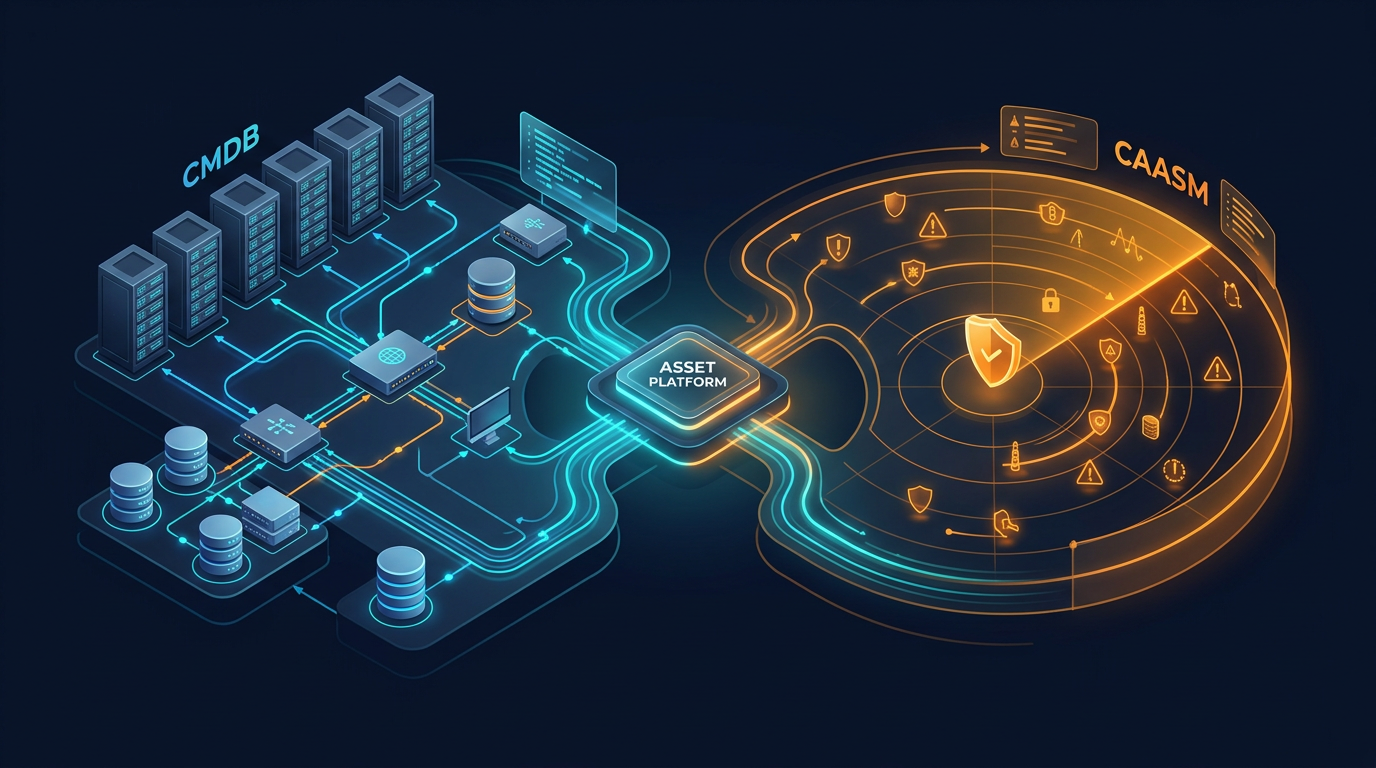
At this point, the fatal weakness of many defense strategies is revealed: The company's SOC monitors the 95 percent of the infrastructure that is neatly documented in the central CMDB with eagle eyes. Every login attempt on the central ERP system is analyzed.
The attacker knows this. That is why they don't even attack this 95 percent. They focus on the remaining 5 percent – the dead zone, the blind spots, the shadow IT.
Typical entry points from practice:
The Orphaned Test Server (Orphaned Asset): A developer spun up a Linux server in AWS eight months ago to test a new software library. The project was discontinued, the developer has left the company, but the server is still running. It was never connected to central patch management. The hacker finds an outdated SSH version on this server and breaks in.
The Acquisition Legacy (M&A): Your company bought a small competitor two years ago. The networks were hastily merged, but the IT documentation was never fully consolidated. A small branch office is still running an ancient VPN router whose firmware hasn't seen an update in five years.
API Sprawl: The marketing team commissioned a web agency to build a campaign site. The agency set up an unsecured API interface to the central customer database. The IT team knows nothing about this interface.
Why CAASM Turns the Tide
The hacker wins because they know your network better than you do. They find the assets that are missing from your manual Excel lists or outdated CMDBs.
CAASM solves exactly this asymmetric information deficit. Instead of waiting for a server to "report" to the security team, CAASM turns the tables. A CAASM platform like Qbilon continuously scans and correlates your infrastructure – exactly as a hacker would, but from the inside out and with full access to all APIs (cloud, network, identity).
Eliminating Shadow IT: If CAASM detects a cloud server being spun up that is not assigned to any known project and lacks an EDR (Endpoint Detection and Response) agent, the system immediately sounds the alarm (Security Coverage Gap). The blind spot is illuminated before the hacker finds it.
Risk Prioritization: When a new vulnerability (like Log4j) becomes known, CAASM shows you in seconds whether this gap exists in your network and – even more importantly – whether the affected servers are reachable from the internet (external attack surface).
Conclusion: Become the Hacker of Your Own Network
Defending a castle is futile if you don't know how many doors and windows it actually has. To protect yourself in the modern threat landscape, you must stop relying on static documentation.
You must continuously scan, correlate, and question your network. CAASM provides you with exactly the map of your attack surface that an attacker would draw – with the decisive advantage that you can close the gaps before they exploit them. End the blind flight and take control of every square inch of your infrastructure.