Synergies between Information Security Management Systems (ISMS) and EAM
Merging EAM and ISMS: One Data Basis Instead of Double Maintenance
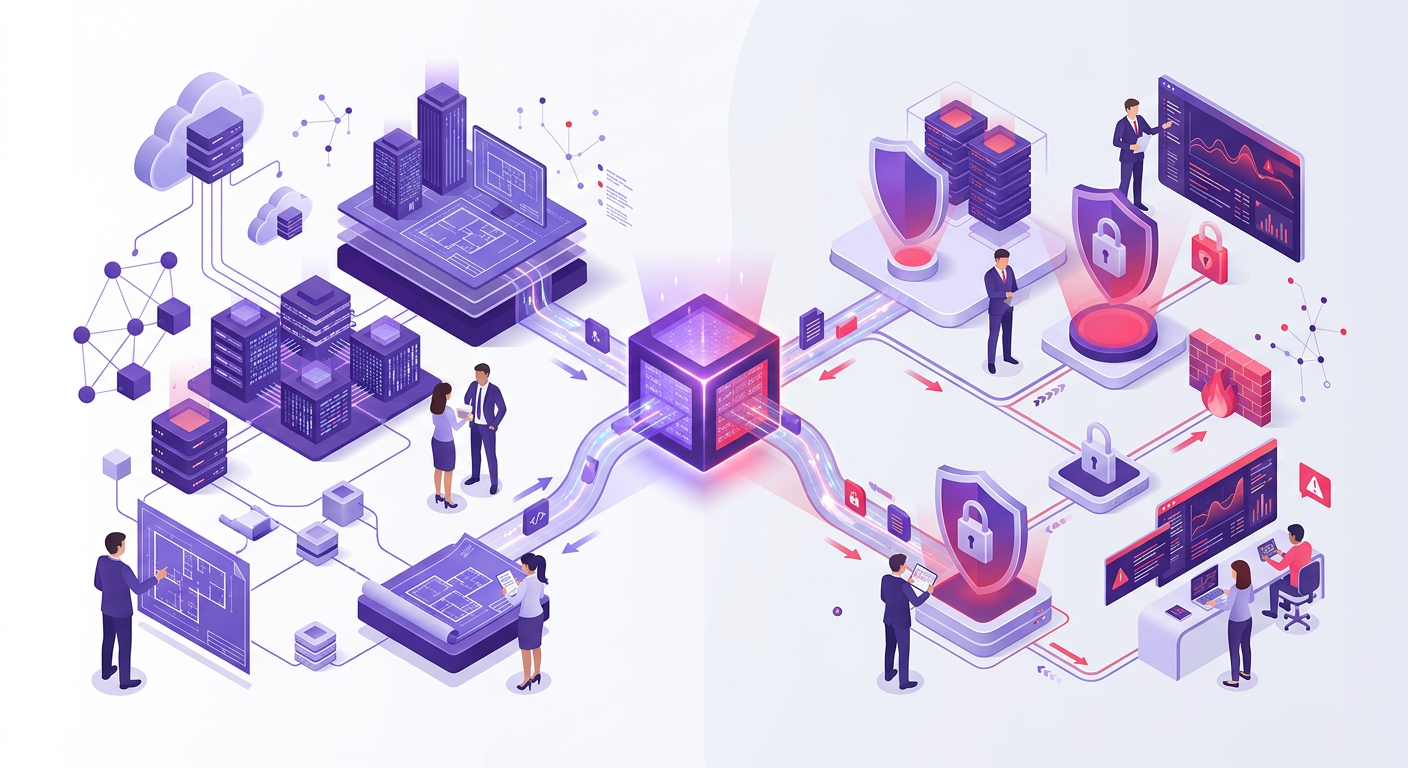
In large IT organizations, there are often departments that sit physically close to one another but, in practice, work as far apart as if they were on different planets. A classic example of this silo thinking is the relationship between the Enterprise Architecture Management (EAM) team and the team responsible for the Information Security Management System (ISMS), often according to ISO 27001.
The EAM department (the "urban planners" of IT) draws up zoning plans, plans cloud migrations, and manages the application portfolio. Their goal is to design the IT landscape to be efficient, redundant, and future-proof (aligned with the business strategy).
The ISMS team (the "guardians") takes care of risk management, threat analysis, security policies, and compliance audits. Their goal is to ensure the confidentiality, integrity, and availability of systems (CIA triad, sometimes expanded to include "authenticity").
Although these goals are strongly intertwined, both teams traditionally work with completely different tools, databases, and processes. In this post, we show why this separation is a massive strategic error, how both disciplines benefit extremely from a shared data basis, and how "Security by Design" becomes possible in the first place.
The Double Data Dilemma
The core of the problem lies in data collection. To build an ISMS (especially the risk assessment according to ISO 27001), the security team needs a complete inventory of all assets worth protecting. They need to know which servers, applications, and data exist.
To plan an architecture, the EAM team needs exactly the same thing: a complete inventory of all servers, applications, and their dependencies.
What happens in reality? Both teams send separate Excel questionnaires to department heads in the company. Both teams buy their own modeling tools (one team a GRC tool for Risk & Compliance, the other an expensive EAM tool). Both teams maintain their own "truth." The result is two databases isolated from each other, which are no longer in sync at the latest three months after their creation. If a system is decommissioned in the EAM, it often continues to run in the ISMS risk register for years as a potential risk.
The "Single Source of Truth" as a Connecting Element
The obvious (but often technically demanding) solution is the creation of a single, automated data layer (meta-layer) from which both the ISMS and EAM draw.
When companies implement a platform like Qbilon that connects directly to the operational IT infrastructure (cloud, network, vCenter, security tools) via APIs, a dynamic "Single Source of Truth" is created. This shared data basis creates enormous synergies:
- Context-rich Risk Management (ISMS benefits from EAM): The ISMS team sees a vulnerability on a Linux server in its scanner. Based on this information alone, a risk assessment is hardly possible. If the team now looks into the shared, EAM-enriched data basis, it immediately sees the "business context": The server supports the application "Customer Portal" (maintained by EAM), the responsible business owner is Marketing (from EAM), and the application processes GDPR-relevant data (maintained by the privacy team). The abstract vulnerability immediately becomes a prioritized business risk.
- Security by Design (EAM benefits from ISMS): Enterprise architects plan the replacement of legacy systems. Without security context, they decide purely based on functionality or costs. However, if the EAM view is linked to the live data of the ISMS, the discussion changes: "We see that application X is running on servers that, according to the ISMS, are chronically outdated and for which the manufacturer no longer provides security patches (CRA violation). The migration of this application to a secure SaaS environment immediately gets the highest priority on the architecture roadmap." Security is no longer tacked on at the end of the project but is already anchored in the design phase of the architecture (Security by Design).
- One Truth for Auditors: When the ISO 27001 auditor arrives, they ask for the asset inventory. There is nothing worse than the ISMS team presenting a list of 500 servers and the auditor learning in a conversation with the IT architect that the company operates 600 servers according to EAM planning. A shared, automated data basis completely eliminates these inconsistencies.
Conclusion: Tearing Down Silos, Increasing Efficiency
EAM and ISMS are two sides of the same coin. Both disciplines have the task of making the complexity of the IT landscape manageable and protecting the company from existential risks (whether cyberattacks or technological dead ends).
In 2026, companies can no longer afford to let these two strategic pillars operate in isolated data silos. The introduction of an automated asset management platform as a "Single Source of Truth" ends redundant data maintenance, provides architects with the necessary security context, and gives the compliance team a deep business understanding. Reach out across the hallway—and share the truth.