
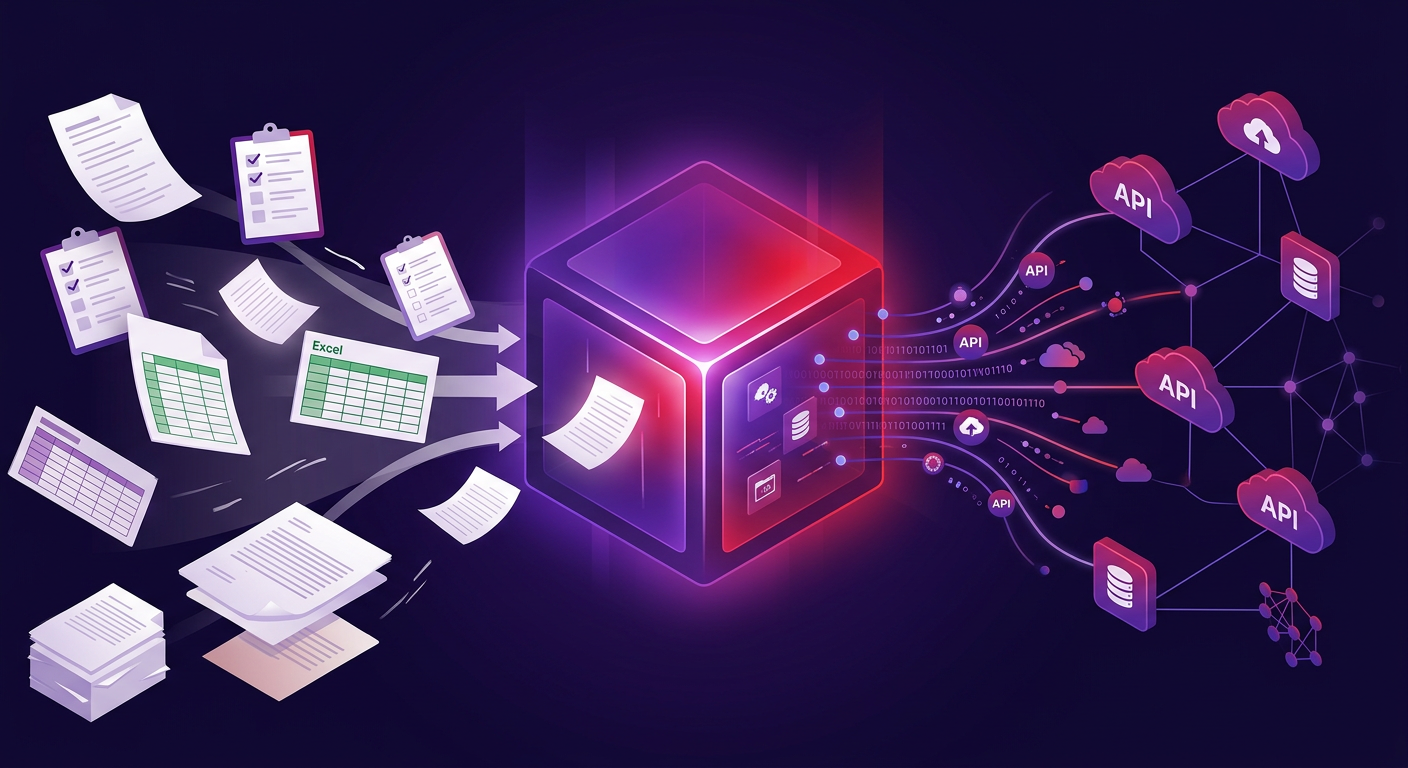
The Burden of Proof (Evidence Generation) in IT Audits Made Easy
Automating Evidence Generation: An End to Manual Proofs
When you ask IT managers to describe their greatest professional trauma related to compliance frameworks (such as NIS-2, ISO 27001, or TISAX), the answer is rarely: "Defining the security policies." Formulating rules on paper is often done quickly. The real pain point that drives IT departments to the brink of despair and sends budgets skyrocketing goes by another name: Evidence Generation (the burden of proof).
An audit is essentially a legal process in technical clothing. The auditor is the judge, and they do not judge based on what you tell them, but exclusively on what you can prove to them. A policy stating "All server hard drives must be encrypted" is worth exactly zero points in an audit if you cannot prove through hard, technical data (evidence) that this encryption was actually active on every single server over the last twelve months.
In this post, we dismantle the manual madness of evidence generation and show how you can end this procedural nightmare forever by using an automated, historized asset platform.
The Anatomy of an Inefficient Process
To understand the scope of automation, we must look at how evidence collection still operates in 80 percent of companies today.
The auditor submits a Request for Information (RFI). A typical item reads: "Please prove that the process for onboarding new cloud resources includes the mandatory installation of the Endpoint Detection Agent (EDR) and that this process was followed without gaps throughout the entire past year."
As a result, a massive manual scavenger hunt begins within the company:
- Data Export: Cloud administrators log into AWS or Azure and export CSV lists of all instances started in the last year.
- System Reconciliation: Security analysts log into the EDR tool console and likewise export a list of all known agents.
- VLOOKUP Hell: A compliance manager (often a highly paid specialist) now tries to reconcile these two lists in Excel using VLOOKUP. Since hostnames in the cloud are often different from those in the security tool, the automatic reconciliation fails for 30 percent of the entries.
- Manual Verification: The missing 30 percent must be clarified manually by searching through log files, ticket systems (Jira/ServiceNow), and email threads.
This process often consumes several man-days for a single audit requirement. Multiply that by the 93 controls of ISO 27001:2022 (Annex A), and you understand why "audit mode" paralyzes entire IT departments for weeks in many companies.
The Consequences of Manual Evidence: Errors and "Audit Fatigue"
The economic problem (wasted working time) is just the tip of the iceberg. The far greater problem is the quality of the generated evidence.
When an auditor discovers that data was manually copied together from different systems, alarm bells ring. They know that this data is highly susceptible to manipulation and almost always inconsistent (e.g., if the exported cloud list is from October 12th, but the EDR list is from October 15th). Such inconsistencies lead to annoying follow-up questions (findings) and, in the worst case, to non-conformities in the audit report.
Furthermore, this recurring, mindless process leads to "audit fatigue" among IT experts. The best minds in your security team want to hunt hackers and improve architectures, not spend days coloring Excel cells green.
Push-Button Evidence: The Paradigm Shift
The solution to this problem is not a better Excel template, but a technological paradigm shift: the complete automation of IT documentation.
A platform like Qbilon, which functions as a central "Single Source of Truth," fundamentally changes evidence generation. The key lies in the combination of API-based data collection, intelligent mapping, and historical storage (the "Time Machine").
How the Same Audit Request Works with an Automated Platform
- No Manual Exports: The platform is already live via APIs connected to AWS, Azure, and the EDR tool. It continuously aggregates and normalizes the data in the background (Continuous Compliance).
- Policies in Code: The compliance requirement is stored once as a technical rule in the platform: "If new cloud instance = TRUE, then EDR agent = INSTALLED."
- Evidence at the Push of a Button: When the auditor requests proof for the last year, the compliance manager opens the Qbilon dashboard, selects the defined policy, and sets the time filter to the last 365 days. With one click, the system generates a verified, tamper-proof report.
This report shows not only the flawless current state but proves, through historized data points, that the rule was followed on every single day of the past year without interruption.
Conclusion: Back to Real Work
In 2026, collecting evidence for IT audits should no longer be a manual Herculean task. Forcing IT experts to spend weeks exporting and reconciling data from various systems not only burns massive amounts of money but also creates an error rate that inevitably leads to problems with any strict NIS-2 auditor.
Free your team from this burden. An automated, data-driven CMDB makes "Push-Button Evidence" a reality. You transform weeks of audit stress into a matter of minutes and can finally concentrate on what really matters again: the strategic development and protection of your company.