
IT-OT Convergence: The Unique Challenges of Inventorying Industrial Plants
Inventorying OT Assets: Why Visibility Decides Between IT and OT
For a long time, two completely isolated worlds existed in manufacturing companies, energy suppliers, and logistics groups. On one side was IT (Information Technology): air-conditioned data centers, cloud servers, employee laptops, and standardized Windows operating systems. On the other side stood OT (Operational Technology): the rugged world of factory floors, characterized by programmable logic controllers (PLC), SCADA systems, industrial robots, and sensors that control physical processes.
The golden rule of security used to be: "Air Gapping." Production networks were physically separated from the internet and the office network. A hacker from the internet could paralyze the office, but never stop the assembly lines.
In the year 2026, this golden rule is dead. Welcome to the age of Industry 4.0 and the Industrial Internet of Things (IIoT). IT-OT convergence—the merging of these two worlds—is unstoppable. Machines deliver production data in real-time to the AWS cloud, ERP systems directly control material output at the factory gate, and maintenance technicians log in to robot arms via VPN from their home offices. This drives efficiency to unprecedented heights, but it creates a massive security problem.
In this post, we shed light on why capturing and securing OT assets represents the ultimate discipline of inventory management and how you can prevent your factory floors from becoming a gateway for cybercriminals.
Why Hackers Love OT
With the removal of the air gap, attackers have very quickly adapted to the lucrative OT world. Why? Because an attack on OT has far more devastating (and expensive) consequences than an attack on IT.
If the email server fails, employees drink coffee. If the SCADA controller of an automotive supplier is encrypted, the assembly lines stop. Losses run into the millions, which is why the willingness to pay ransoms (ransomware) in OT has historically been significantly higher.
The Main Problem is the Nature of OT Devices Themselves
- Lifespan: An IT server is replaced after 3–5 years. An industrial robot or a control unit often runs for 15 to 20 years. Many systems still run on Windows XP or older, completely unprotected proprietary operating systems.
- Patching is a Taboo: You cannot simply "quickly patch" a plant that runs 24/7 in three-shift operation on a Tuesday morning. Every reboot is a risk to production.
- Fragility: OT networks are archaic. If a security analyst from IT tries to actively scan an OT network for vulnerabilities with a standard scanner (like Nmap), sensitive old control systems simply crash. The scanner paralyzes production, not the hacker.
The Inventory Dilemma: Who is Responsible?
Convergence also brings cultural problems. The IT department knows its way around cloud and firewalls but doesn't understand Siemens S7 controllers. The plant operators (OT engineers) know every screw on the machine but view IP addresses and firewalls as annoying IT stuff.
The result: The OT inventory exists, if at all, in the form of outdated Excel lists on the shift supervisors' laptops. The company's central IT documentation (CMDB) is blind to the production hall. If the security team now needs to monitor the corporate network or prepare a NIS-2 audit, they are facing a black wall. There is no "Single Source of Truth."
How to Safely Bring OT into the Light
To break down this life-threatening silo, companies need an asset management strategy that speaks the language of both worlds. A modern platform like Qbilon solves this problem through intelligent, passive integration:
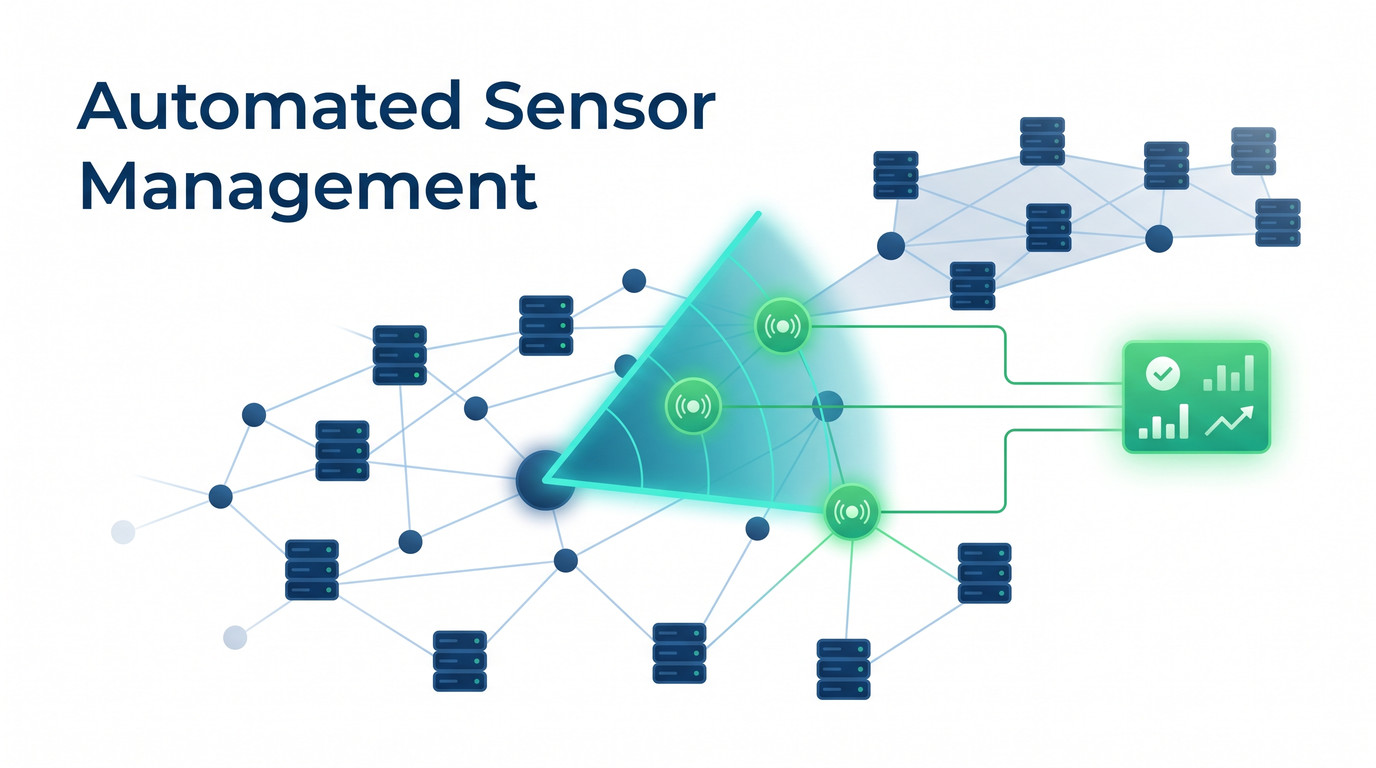
- Passive OT Discovery: Since active scans are too dangerous in the factory, inventorying OT devices today is done passively. Specialized OT security sensors "listen" to network traffic at the switches (Port Mirroring/SPAN) and identify controllers, robots, and sensors based on their communication patterns. Qbilon connects these specialized OT sensors via APIs and imports the data seamlessly into the central CMDB.
- The Magic Bridge: Dependency Mapping: This is where the true value unfolds. Qbilon does not just show the OT servers and the OT machines. The platform visualizes dependencies across system boundaries. The IT manager sees on a dashboard: "If the old, unpatched server in the developer network (IT) is infected by ransomware, there is a direct network route to critical manufacturing line 3 (OT)." This insight allows for the immediate establishment of life-saving firewall rules (micro-segmentation).
- Unified Compliance Reports: For regulators (NIS-2), the company is a single entity. Qbilon allows for defining compliance policies across systems and generating evidence proving that both the cloud storage and the control unit in the basement are properly inventoried and secured (commensurate with the circumstances).
Conclusion: One Company, One Database
The days when IT admins and plant operators could hide behind their respective responsibilities are over. IT-OT convergence is a fact, and hackers no longer differentiate between the office and the factory.
To secure the achievements of Industry 4.0, you must tear down the data silos. You need a central, automated IT memory that captures the web server at AWS with the same detail and history as the PLC controller on the production line. Only with a "Single Source of Truth" that unites both worlds can you maintain control over your company.