IT Hygiene: The Boring but Most Effective Protection Against Cyberattacks
When you walk through the halls of major cybersecurity trade fairs like "it-sa" in Nuremberg or the "RSA Conference" in San Francisco, you are virtually overwhelmed by a flood of futuristic terms. It's all about Artificial Intelligence for threat detection, machine learning, zero-trust network architectures, next-generation firewalls, and behavior-based anomaly detection. The cybersecurity industry loves the spectacular.
But when you read the reports from the major incident response teams (the IT foresters who sweep up the debris after a hacker attack), a completely different, almost banal reality is revealed. In over 80 percent of successful ransomware attacks and data leaks, hackers did not use highly complex, previously unknown zero-day exploits that could only have been stopped by AI.
They used a weak password on a forgotten VPN access. They exploited a software vulnerability for which a patch had been available for six months. They moved across an old test server in the network that the IT department no longer knew existed. In short: the attacks were successful because basic IT hygiene was missing.
In this post, we shed light on why the "boring" basics of IT security are your most effective shield and why IT hygiene remains an empty illusion without automated asset management.
What is IT Hygiene, actually?
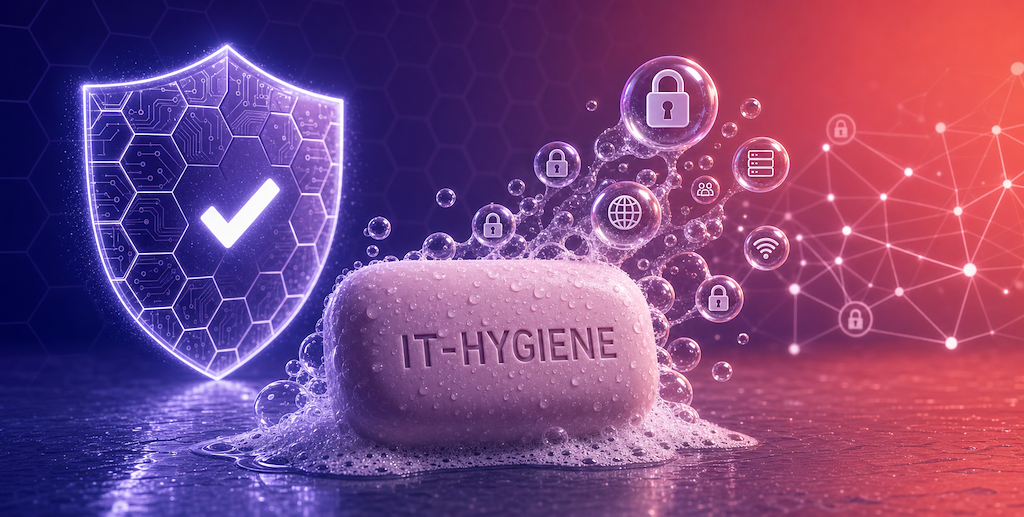
The term hygiene originates from medicine. Before doctors in the 19th century began to perfect highly complex surgical procedures, they learned that simple hand washing drastically reduces mortality rates. In IT, it is exactly the same principle.
IT hygiene (or cyber hygiene) includes the basic, routine measures and processes that ensure the health and security of a network. This primarily comprises three pillars:
- Asset Management: Knowing exactly at all times which hardware, software, cloud resources, and data exist in the company (Inventory).
- Configuration Management: Ensuring that these assets are securely configured (e.g., no default passwords, unnecessary ports closed, active encryption).
- Patch Management: The timely and complete installation of security updates for operating systems and applications.
These tasks don't sound like Hollywood hackers and espionage thrillers. They sound like administrative hard work. And that is exactly why they are neglected in so many organizations.
The Danger of "Tool Stacking"
Many companies try to compensate for a lack of IT hygiene by purchasing expensive security tools. A state-of-the-art Endpoint Detection and Response (EDR) system is acquired to block malware on servers.
But what happens if the IT department doesn't even know all the servers? What if 15 percent of the virtual machines (shadow IT, orphaned assets) in the cloud aren't even equipped with the EDR agent because they aren't in the manually maintained CMDB? Then the company has made a million-dollar investment in security software, but the network remains permeably open.
The BSI (Federal Office for Information Security) makes it unmistakably clear time and again in its IT-Grundschutz: without a complete structural analysis (inventory), all downstream security measures lead to nothing. You can hire the most expensive bouncer in the world – if you don't know that your building has a back door, he is of no use to you.
How to Automate IT Hygiene
The problem with IT hygiene is that when performed manually, it feels like the proverbial Sisyphus project. No sooner have you updated the Excel list of servers than three new instances are started in AWS. No sooner have you patched all systems than Microsoft releases sometimes over a hundred new security updates on "Patch Tuesday."
The only way to establish consistent, comprehensive IT hygiene is radical automation. This is exactly where a platform like Qbilon comes in:
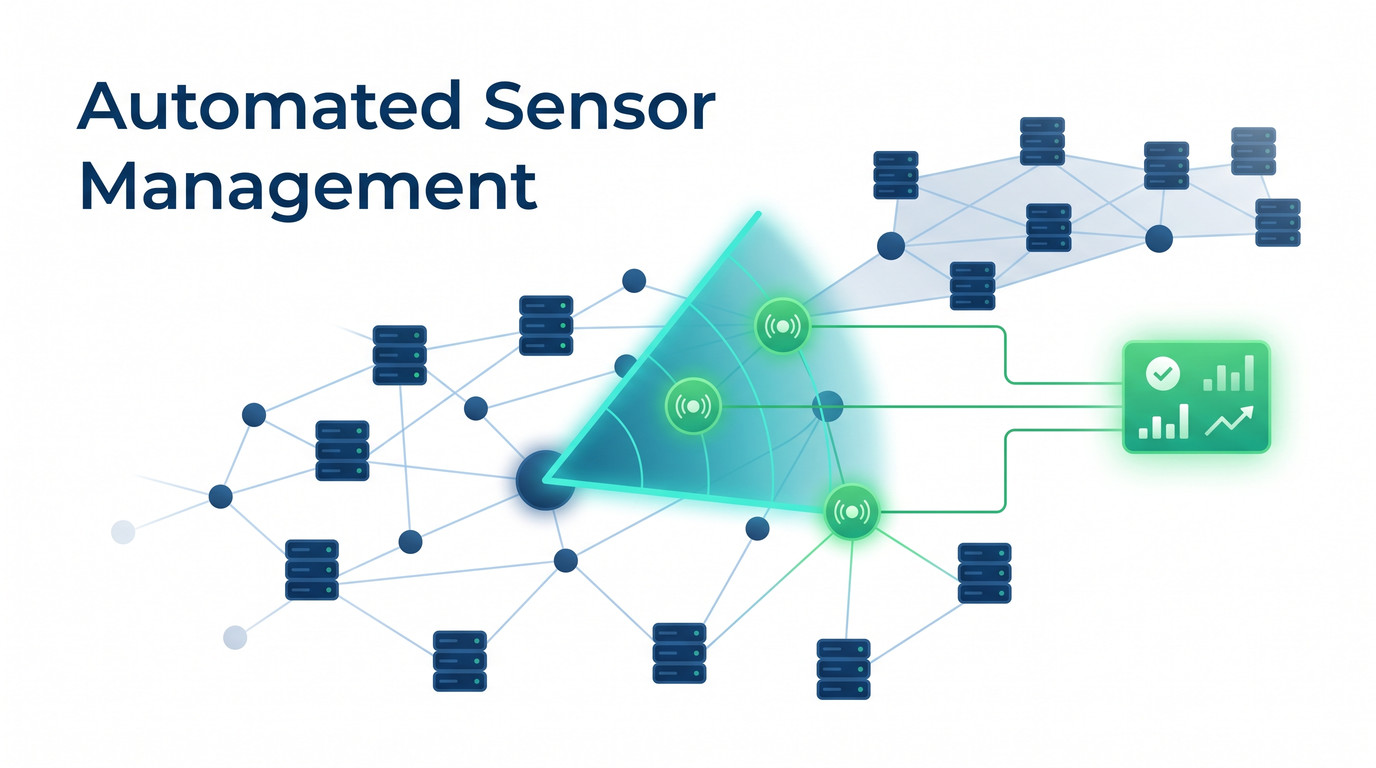
- Enforce Visibility: The foundation of hygiene is knowledge of the patient. Through API integrations into all relevant IT environments (network, hypervisor, public cloud, identity management), Qbilon automatically creates a complete image of the infrastructure. There are no more "forgotten" basement rooms.
- Define and Monitor Hygiene Rules (Policies): Instead of administrators searching for errors manually, hard rules can be stored in a modern platform.
Rule A: "Every Windows system must have the CrowdStrike agent installed." Rule B: "No database server may have a direct network route to the internet (0.0.0.0/0)."
The system continuously monitors the entire dynamic infrastructure (Continuous Compliance) against these hygiene rules. As soon as a rule is violated – for example, because a developer briefly opens a port – the system sounds the alarm.
- Historical Traceability (for NIS-2): And here again, the regulatory aspect comes into play: in the event of an NIS-2 audit, it is not enough to say: "We wash our hands regularly." You have to prove it. The historical data storage ("Time Machine") of the Qbilon platform provides auditors with the seamless proof that patch management functioned in a timely manner over the last year and that no insecure configurations went unnoticed.
Conclusion: The Basics are the Goal
Don't make cybersecurity more complicated than it needs to be. Before you release budgets for the next generation of AI-powered defense systems, ask yourself the most basic of all questions: Do we know 100 percent of our IT assets and do we know what state they are in?
IT hygiene may be a boring topic, but it is the unshakable foundation of any security strategy. Automate this foundation through an intelligent, data-driven CMDB. If you master the basics, you have already barred the door to 90 percent of everyday cyber threats.