
The Role of the CMDB in Vulnerability Management
Why Vulnerability Scanners Fail Without a CMDB
One of the most exhausting and thankless jobs in modern IT is the role of the security analyst in the field of vulnerability management. In theory, the task sounds simple: find vulnerabilities in the company's software and hardware and ensure they are remediated (patched).
In practice, however, it often resembles a nightmare. Modern vulnerability scanners (such as Nessus, Qualys, or Rapid7's InsightVM) do an excellent job of finding security holes (CVE entries = Common Vulnerabilities and Exposures). Too excellent, to be honest. A typical scan in a mid-sized company spits out a report every Monday morning containing thousands, sometimes tens of thousands, of discovered vulnerabilities.
In the "Severity" column, hundreds of entries glow bold red: Critical! Patch immediately!
But the security team lacks the resources to patch hundreds of servers immediately (which also often means downtime for business departments). Analysts suffer from massive alert fatigue. They are drowning in data and don't know where to start. In this post, we shed light on why scanners alone do not solve the problem and why a modern Configuration Management Database (CMDB) is the absolutely indispensable compass in vulnerability management.
The Missing Piece of the Puzzle: Business Context
The fundamental problem with a vulnerability scanner is its isolation. A scanner sees IP addresses, operating system versions, and open ports. It determines: A vulnerable, outdated Apache web server version with a critical security hole (CVSS score 9.8) is running on IP address 10.0.5.55.
What the scanner doesn't know is:
- Who owns this server?
- Is this server reachable from the public internet or hidden deep within the internal network?
- Is this a completely unimportant development server that will be deleted tomorrow anyway?
- Or is it the central ERP database server that controls the entire production line and holds highly sensitive customer data (GDPR-relevant)?
Without these answers (the business context), risk-based prioritization of vulnerabilities is simply impossible. If the security team tries to patch unimportant test servers first and neglects the customer database in the process, the company is at maximum risk.
The CMDB as a Context Engine
This is where an intelligent, automated CMDB (like the Qbilon platform) comes into play. The CMDB is the brain of the IT infrastructure. It knows the dependencies (dependency mapping), the asset owners, the protection requirements, and the network context of every single system.
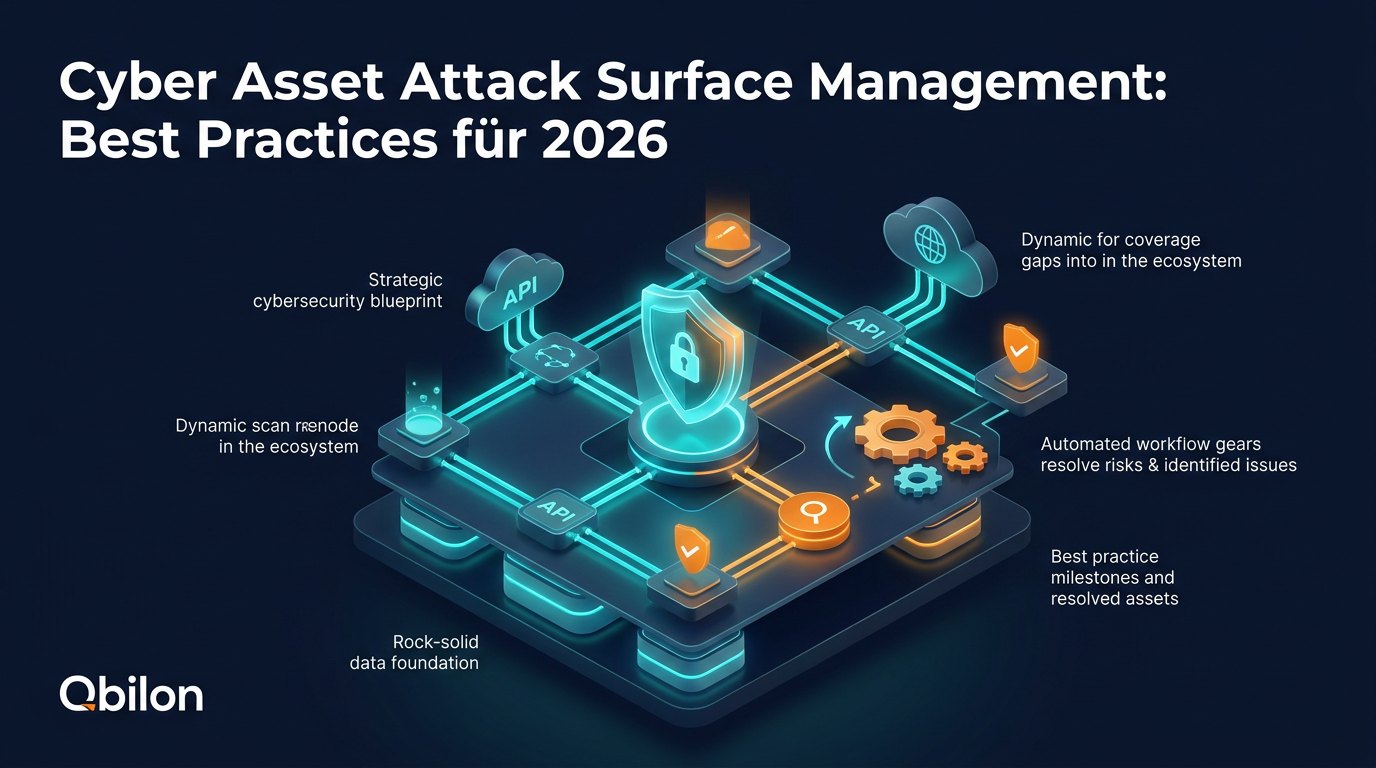
If companies want to professionalize their vulnerability management and move towards Cyber Asset Attack Surface Management (CAASM), they must merge these two worlds.
This is how the synergy works in practice:
- Data Aggregation via API: The CMDB retrieves raw vulnerability data fully automatically from the scanner via interfaces. At the same time, it possesses architecture data from AWS, Azure, VMware, and Active Directory.
- Automatic Mapping (Merging): The platform overlays the scanner data onto the operational reality. It immediately assigns the critical vulnerability on IP 10.0.5.55 to the correct asset in the CMDB.
- Risk-Based Prioritization (The "Magic Moment"): Now the thing happens that saves the analysts' work: the platform filters the noise. An algorithm weights the criticality of the vulnerability against the criticality of the asset.
- Scenario A: Critical vulnerability + test server + no internet connection = Low priority.
- Scenario B: Medium vulnerability + central web shop + direct internet access = Highest priority (immediate action).
A list of 5,000 unstructured alerts becomes a razor-sharp top-10 list of real, business-critical risks.
From Discovery to Remediation
Another massive problem in vulnerability management is the "ping-pong effect" during remediation. The security team finds a vulnerability but doesn't know who is allowed to patch the server. Emails are sent around, tickets get lost in the wrong queues. Weeks pass, the risk remains (a field day for NIS-2 auditors demanding continuous compliance).
With the context of a modern CMDB, this idle time is eliminated. The platform knows who the "Asset Owner" (responsible person) for the affected ERP server is. The system can automatically create a ticket in the IT service management system (e.g., Jira or ServiceNow), assign it directly to the right team, and provide all necessary context information (including downtime dependencies for patching).
Conclusion: Security Needs a Navigation System
Running vulnerability scanners without a reliable, up-to-date, and automated CMDB in the background means operating blind. It only creates noise and frustration for the security team.
The intelligent linking of asset management and vulnerability data is the first and most important step toward true Cyber Asset Attack Surface Management (CAASM). Only when you know exactly how important a system is to the company's success can you decide how much effort you need to invest in its protection. Give your security team the context they need—they will use it to make your network many times more secure.