
Orphaned Assets: How Unused Servers Burden Your IT Budget and Security
The agility of modern IT is a double-edged sword. On one hand, cloud computing enables development teams to achieve unprecedented speed. Infrastructure is no longer ordered through procurement in processes lasting months; it is defined via code (Infrastructure as Code) and provisioned in minutes on AWS, Azure, or Google Cloud.
However, this ease of resource procurement leads to a silent but dangerous epidemic in almost every large company: the uncontrolled proliferation of orphaned assets or so-called "zombie servers."
Orphaned assets are IT resources—whether virtual machines, databases, unattached IP addresses, or block storage volumes (e.g., EBS volumes in AWS)—that still exist, cost money, and are connected to the network, but are no longer used for any active business process and no longer have a responsible owner (asset owner). In this post, we reveal why these ghost resources are much more than just a financial nuisance and how you can automatically clean up your IT graveyard.
How do Orphaned Assets arise?
Zombie servers rarely result from malicious intent; they are usually the byproduct of everyday IT processes that lack end-to-end lifecycle management:
- The forgotten test system: A team spins up a server farm for a load test on Friday. On Monday, the test is over, the project is successfully completed—but no one clicks "terminate."
- The incomplete offboarding process: An outdated application is shut down and the primary virtual machine is deleted. However, the expensive associated cloud storage (e.g., an EBS volume in AWS) or the load balancer in front of it are forgotten.
- Employee turnover: A developer leaves the company. He leaves behind dozens of development containers and cloud instances in his personal project area. No one on the team knows exactly what these machines do, so no one dares to shut them down.
Danger 1: The silent cost explosion (FinOps nightmare)
Cloud providers earn handsomely from their customers' forgetfulness. Orphaned assets produce a continuous stream of senseless spending. A single orphaned database server in the cloud can swallow hundreds or thousands of dollars per month. Unattached public IP addresses or unused snapshots steadily strain the budget.
When companies do not have their cloud financial management (FinOps) under control, 20 to 30 percent of the monthly cloud bill often flows into systems that do not produce a single cent of business value (cf. "Flexera State of the Cloud Report 2025/2026"). In times of tight budgets, this is an inexcusable waste of resources.
Danger 2: The perfect hiding spot for hackers (Security nightmare)
As painful as the financial losses are, the far greater risk of orphaned assets lies in the area of cybersecurity.
An active, productive server is under strict observation. It is part of patch management, the security team monitors its logs, and it appears in regular audits. A zombie server, on the other hand, falls completely off the radar. Since no one is responsible for the system anymore, updates are no longer installed. The EDR agent (Endpoint Detection and Response) is often outdated or no longer functioning.
For hackers, orphaned assets are an absolute jackpot. If an attacker finds a known vulnerability in such a forgotten test server, they can infiltrate the corporate network unnoticed. Since the server is seemingly "dead," no monitoring tool sounds an alarm when the hacker installs a backdoor there or uses the server as a pivot point for attacks on the production database. Shadow IT and orphaned assets are the soft flanks of even the most expensive Zero Trust architecture.
The automated ghost hunt
How do you get rid of the zombies? Trying to identify orphaned assets manually by clicking through cloud dashboards or comparing Excel lists is completely futile. By the time you have found one zombie, three new ones have already been born.
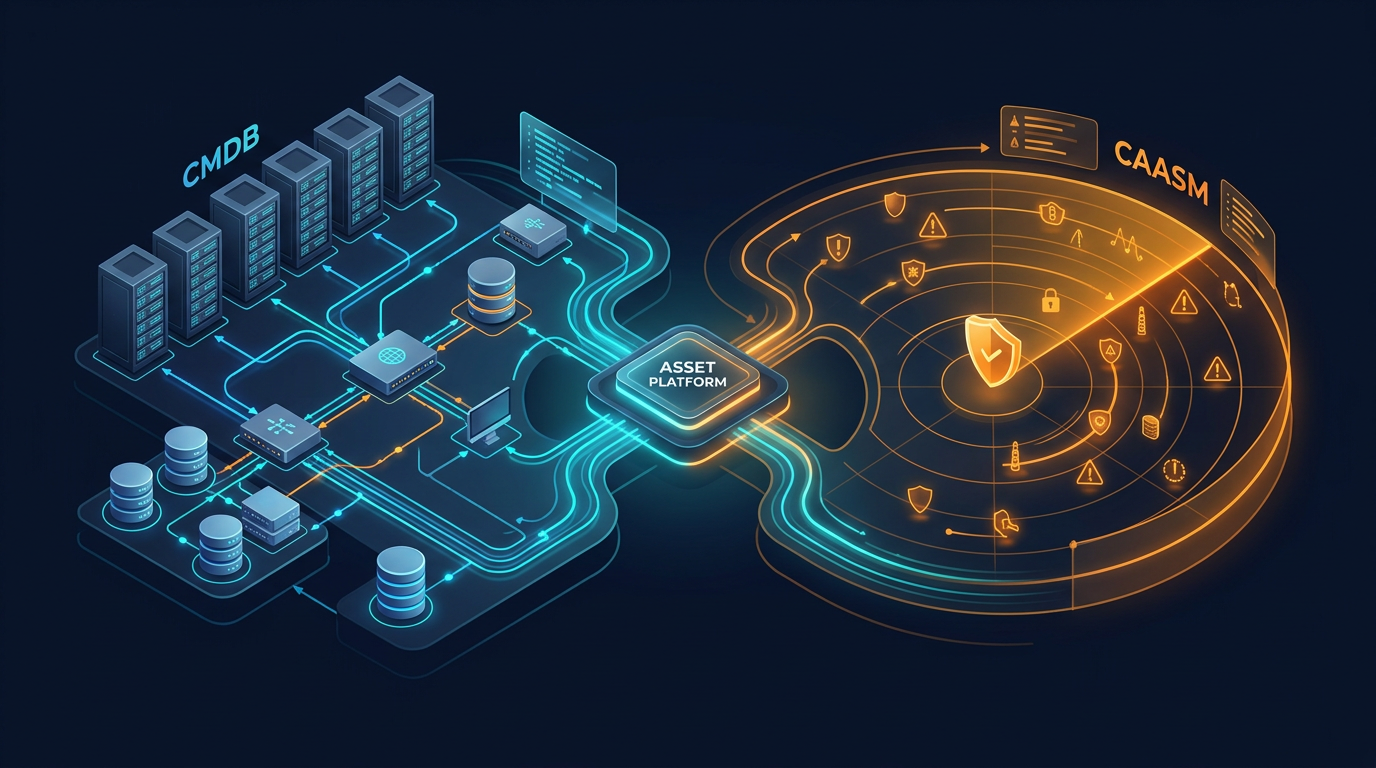
Identification requires an automated "Single Source of Truth" that combines operational, financial, and security-relevant metrics in real-time. A platform like Qbilon handles this ghost hunt systematically:
- Correlation of cost and utilization: The system reconciles billing data from cloud providers with actual utilization data (CPU, network traffic). A server that has shown 0% CPU utilization and no incoming traffic for four weeks, but generates daily costs, is immediately flagged as a potential zombie.
- Dependency mapping: The system recognizes that a storage volume or an IP address is no longer bound to any running virtual machine. Such "loose ends" are presented to the IT team on a clear FinOps dashboard.
- Automated owner assignment: Every asset must have an owner. Qbilon can enforce policies that, for example, sound an alarm if a server is not assigned a valid "Cost Center" tag in the cloud or if the designated asset owner has left the company according to Active Directory.
Conclusion: Cleaning up pays off twice
Identifying and eliminating orphaned assets is one of those rare cases in IT where two departments that often compete—Finance (CFO) and Security (CISO)—benefit massively from the same measure.
With an automated asset management platform, you end the chaos of fleeting cloud resources. You often drastically reduce your monthly infrastructure costs while simultaneously reducing your attack surface by eliminating the most vulnerable systems in your entire network. Stop paying for your own vulnerability—clean up your IT graveyard.