From Compliance to Security: Why Good ITAM Makes Hackers Despair
IT Asset Management (ITAM) had a massive image problem for a long time. In the perception of many IT experts, ITAM was the discipline of "bean counters." It was about depreciation, software license audits from Microsoft or Oracle, counting monitors, and filling out compliance spreadsheets for auditors. It was administrative, backward-looking and, to put it mildly, terribly boring.
On the other side of the hall sat the "rock stars" of IT: the Cybersecurity teams (SecOps). They hunted hackers, analyzed malware, and built complex Zero Trust architectures. ITAM and Security lived in two completely different worlds.
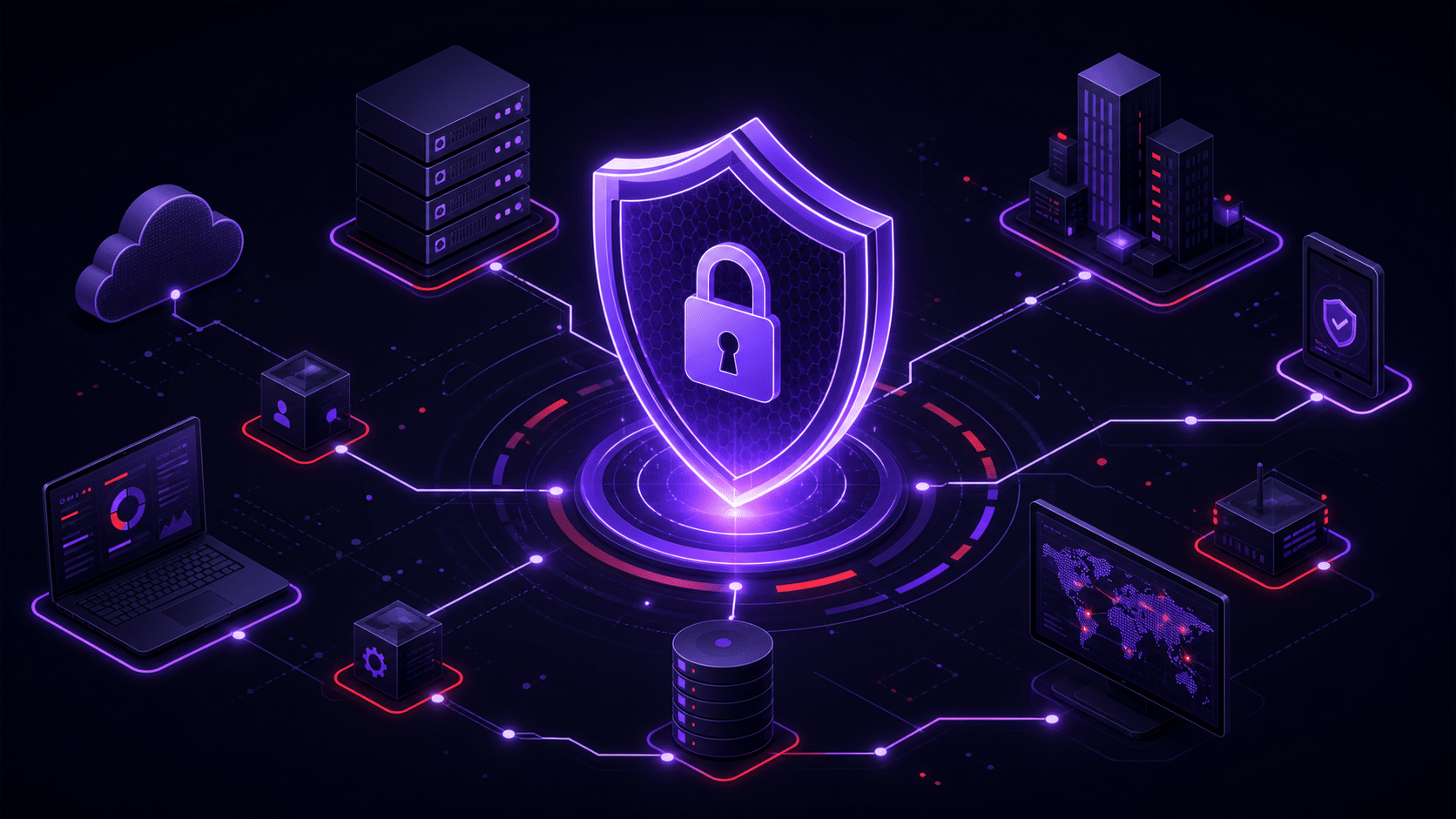
But in recent years, a radical rethinking has taken place. The brightest minds in cybersecurity have realized that even the most sophisticated artificial intelligence for threat detection is useless if you don't master the basics. In this post, we shed light on how IT Asset Management is transforming from a pure compliance tool into the sharpest weapon in proactive threat defense – and why hackers fear exactly that the most.
The Asymmetric Battlefield
To understand why ITAM is becoming a security weapon, you have to understand the asymmetry of cybersecurity.
- The Defender (You): Must successfully protect 100% of the systems, 100% of the time. A single mistake is enough for a catastrophe.
- The Attacker (Hacker): Has all the time in the world and only needs to find a single vulnerability, a single misconfiguration, or a single forgotten server.
How do hackers operate nowadays? Usually, they don't launch a frontal attack on the thick firewalls of your primary data center. The first phase of any professional attack is reconnaissance. Attackers scan the internet and your network with automated tools for the weakest link.
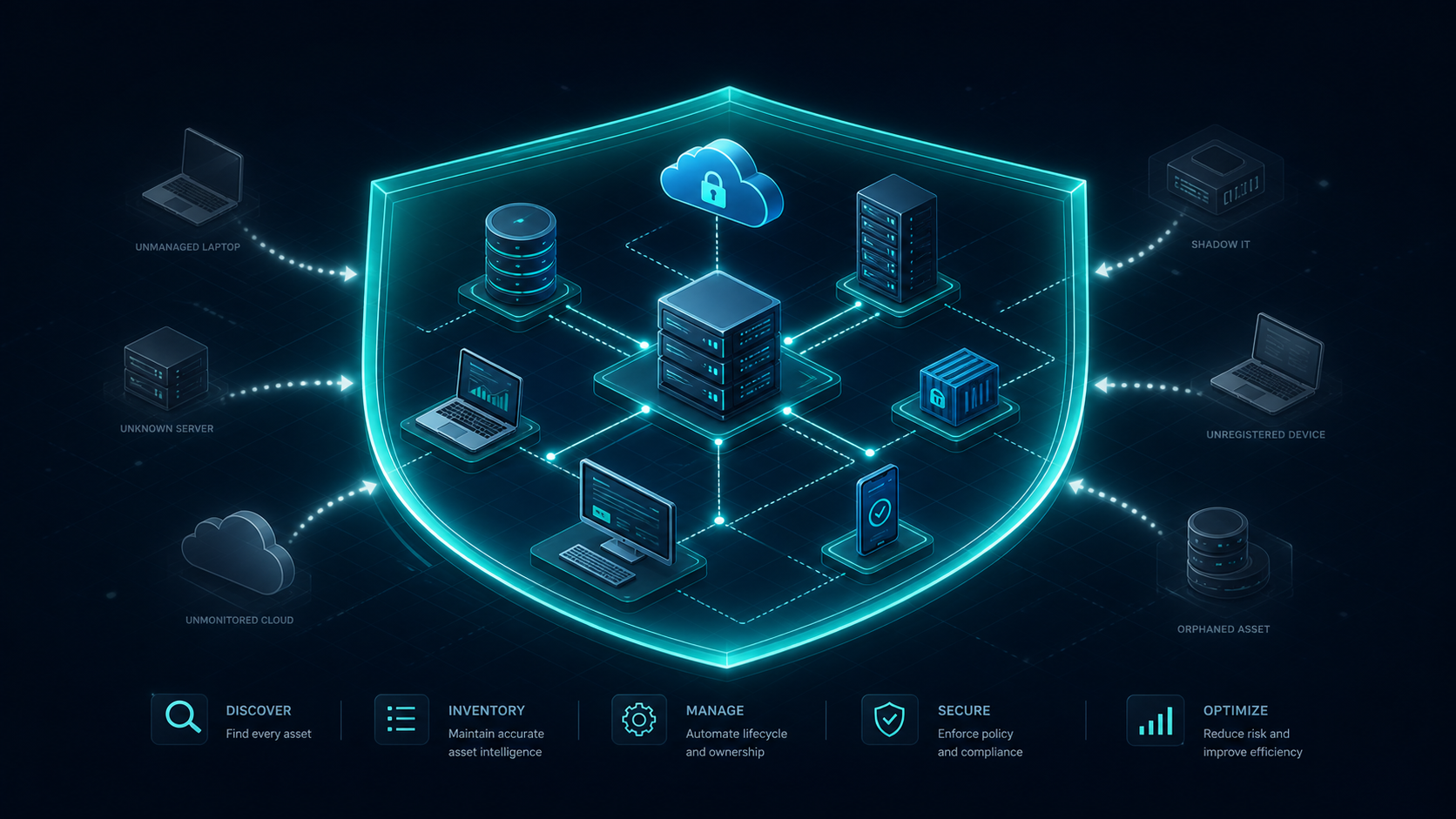
They look for the forgotten VPN gateway still running an old operating system. They look for a test server in the cloud (shadow IT) that a developer set up without IT department approval – and which is therefore neither monitored, patched, nor included in security policies.
The End of Blind Spots
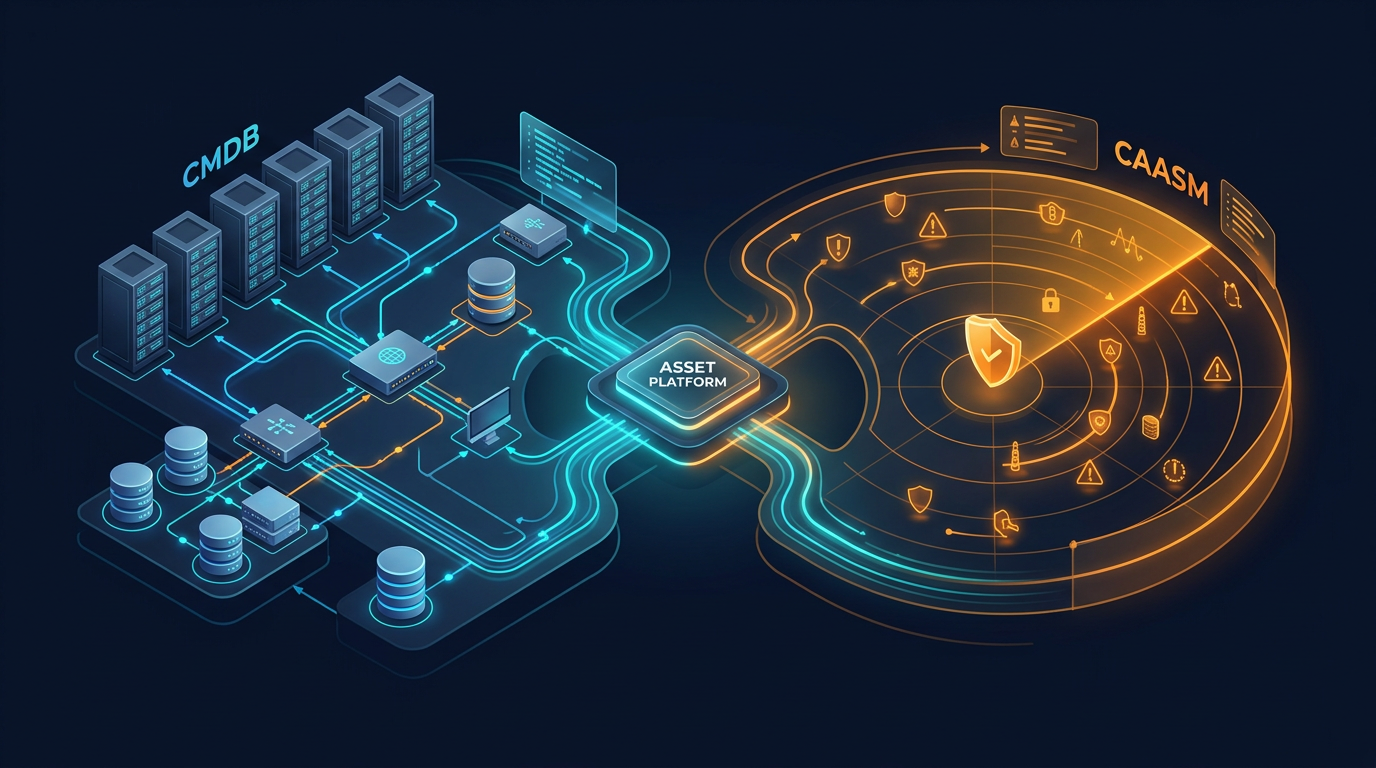
This is where modern, automated IT Asset Management comes into play. A platform that captures all assets in real-time, visualizes dependencies, and historicizes legacy systems turns this asymmetry around. It takes away the attacker's greatest advantage: the blind spot.
When your ITAM works seamlessly and automatically, magic happens for your security team:
- Attack Surface Reduction: The security team no longer has to guess what needs to be protected. When a new asset is spun up in AWS, it appears in the central CMDB at that same second. It cannot be forgotten. An automated rule (policy) immediately checks: Is the EDR (Endpoint Detection and Response) tool installed on this new server? Is it accessible from the internet? If the policy is violated, the system is isolated before a hacker can even scan it.
- Vulnerability Prioritization with Context: A typical vulnerability scanner regularly delivers reports with hundreds or thousands of individual findings of various severity levels – a SecOps team without a contextual filter is simply overwhelmed by this. However, if you link this scanner with a high-resolution ITAM database, risk-based context is created. The ITAM knows: 4,800 of these vulnerabilities are on internal test systems without critical data. But 20 vulnerabilities affect systems that have direct contact with the customer database. The team knows exactly where to start patching.
- Rapid Incident Response: When a security incident does occur, time is the most critical factor. Without clean ITAM, the team spends hours trying to figure out who the compromised IP address belongs to. With a historicized asset database, they have the answer, including all network dependencies and the asset owner, on the screen in two seconds.
Conclusion: Security Begins with Visibility
The path from dull compliance to proactive cybersecurity is not a question of new firewalls, but a question of the data foundation. As long as ITAM and Security work in silos, attackers will always find a way through the gaps.
Those who stop viewing IT Asset Management as an accounting exercise and start using it as the fundamental real-time memory of their IT infrastructure build a line of defense that makes attackers despair. Because you can't use a back door if the system knows every door in the building, monitors it, and automatically locks it in case of doubt. Take control of your data – it is your best shield.