
Mid-Year Checkup: Is Your NIS-2 Foundation Holding Up?
The year 2026 is progressing rapidly, and we have just reached the midpoint of the year. For many IT managers, CISOs, and Compliance officers, this is traditionally the moment to pause, evaluate the year's strategic goals, and make course corrections. But this year, the mid-year checkup is under a special star: the relentless reality of the NIS-2 directive.
The grace periods have expired, budgets were released at the beginning of the year, and countless projects to harden cybersecurity were initiated. But if we are honest, in many organizations there is still a massive gap between the glossy presentations of IT strategy and the harsh, technical reality in the Server room and in the Cloud.
In this post, we use the middle of the year for a ruthless NIS-2 checkup. Is your foundation really standing, or are you building your Compliance strategy on quicksand?
The Illusion of "Paper Compliance"
Many companies mastered the first phase of NIS-2 preparation with flying colors. External consultants were brought in, risk analyses were conducted at the management level, and new, strict IT Security policies were written. The emergency manual was updated and presented to management for signature.
On paper, the company looks excellent. But NIS-2 Auditors in 2026 are no longer document readers – they are technical auditors. They know that a policy stating "All Servers must be updated within 14 days after the publication of a critical patch" is completely worthless if the IT team doesn't even know how many Servers actually exist.
The bitter truth of the first half of the year for many businesses is: policies do not protect networks. Only transparency, control, and measurable processes offer real protection.
Checkpoint 1: Have you defeated your Shadow IT?
The most important question in your mid-year checkup is: In the last six months, did you know exactly which IT Assets were operating in your network at all times?
If your answer is: "Yes, we updated our Excel list in March," then your NIS-2 foundation is at acute risk of collapse. In today's modern, decentralized working world, new Assets are created daily. Departments independently book SaaS services (Software as a Service), and developers launch new Cloud instances unnoticed. This shadow IT is the number one gateway for cybercriminals because it evades patch management and security monitoring.
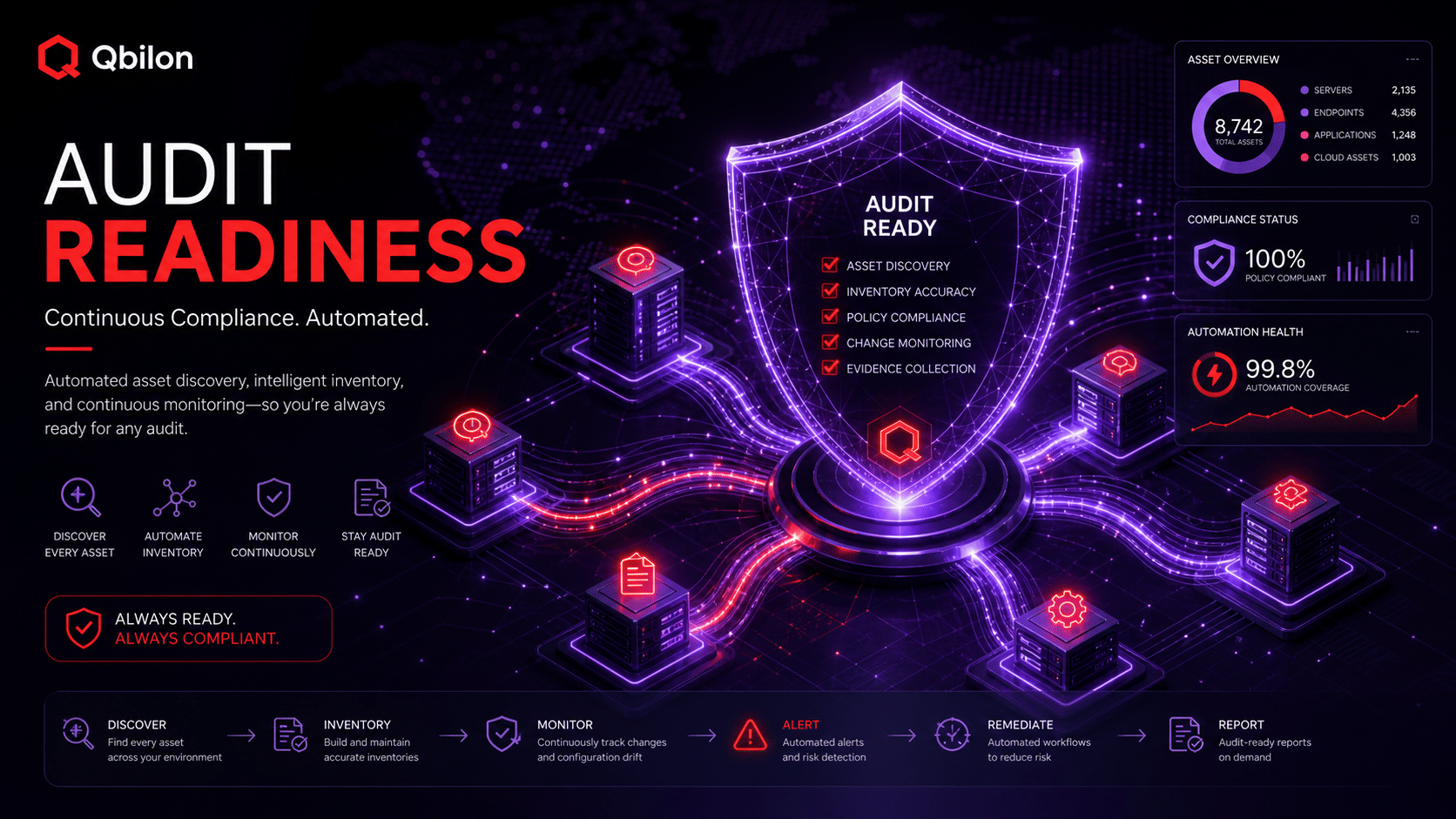
The Target State: Your company must have an automated discovery process that plugs into all relevant systems (Cloud, on-premise, network) via APIs and uncovers unknown Assets in real-time. Only a "Single Source of Truth" puts an end to flying blind.
Checkpoint 2: Can you prove the status from three months ago?
Suppose an Auditor stands at your door tomorrow. He randomly selects February 14th of this year and asks you for the following: "Please show me the exact network segmentation and the list of all externally accessible IP addresses of your company on that day."
How does your team react? Does panic break out? Does a days-long search in old log files and backup archives begin? Or can you open a dashboard, select the date, and call up the historically correct state of the IT landscape at the touch of a button?
NIS-2 requires continuous Compliance and the complete traceability of changes. Establishing an automated "IT memory" through historical data retention is no longer optional, but an absolute requirement for passing an Audit.
Checkpoint 3: The Management Risk (The Liability Question)
A central, often underestimated aspect of NIS-2 is the personal liability of the management. The days when cybersecurity was dismissed as a pure "IT problem" are over. If a significant Security incident occurs and it is proven that the company neglected fundamental duties (such as adequate risk management or a complete Asset inventory), managing directors and board members are liable with their private assets in the worst case.
For IT management, this means: You must not only reassure management that everything is in order; you must be able to prove it to them with hard, reliable data. Automated dashboards that visualize the current and historical Compliance status of the Infrastruktur are the best insurance policy for management.
Conclusion: Course Correction for the Second Half of the Year
If this checkup has uncovered vulnerabilities in your organization, it is not a reason to panic, but a call to action. The second half of 2026 offers sufficient time to correct the mistakes of the past.
The most important step: Say goodbye to static lists and reactive processes. The foundation of NIS-2, BSI-Grundschutz, and ISO 27001 is and remains a complete, automated, and historized knowledge of your own IT landscape. With platforms like Qbilon, you fully automate this foundation. Use the coming months to end the Asset chaos and generate the evidence your auditors want to see – transparently, historically verifiable, and at the touch of a button.