IT Asset Lifecycle Management: From Onboarding to Secure Offboarding
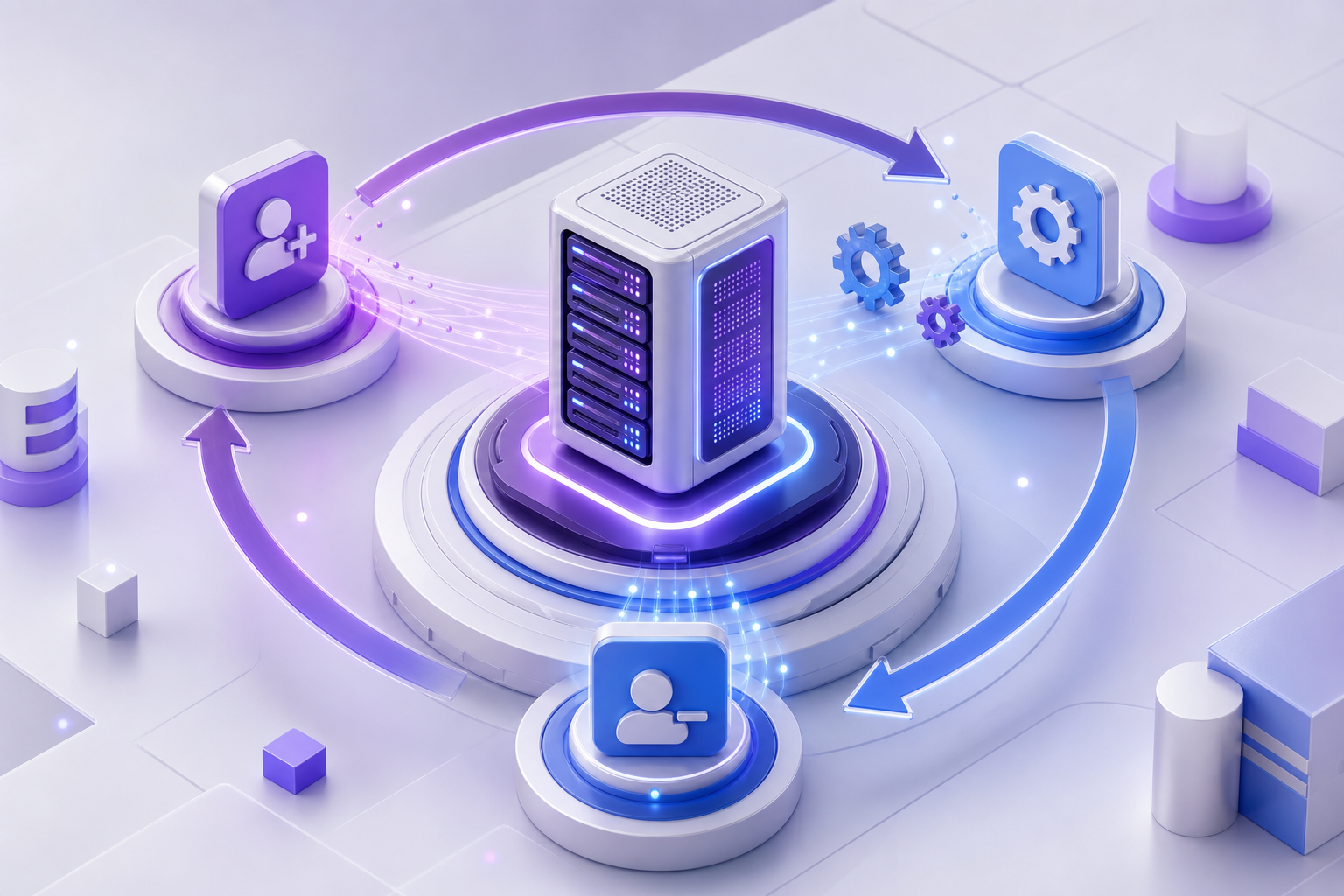
The management of IT assets is often reduced to a single, static question: "What do we currently have in use?" However, this perspective ignores a fundamental truth of information technology: assets are not static. They have a lifecycle. They are born (onboarding), they live, they change, they are updated, and eventually, they die (offboarding).
Professional IT Asset Management (ITAM) must monitor this entire lifecycle seamlessly—from the first day of procurement to final decommissioning. The final chapter, offboarding, is particularly neglected in practice and is increasingly becoming one of the greatest security and compliance risks in modern enterprises.
In this post, we look at the lifecycle of an asset and show how an automated CMDB (Configuration Management Database) revolutionizes lifecycle management.
Phase 1: Procurement & Onboarding (The Birth)
The lifecycle often begins even before the asset physically (or virtually) appears in the network. During onboarding, it must be ensured that a new system is cleanly inventoried and provided with the correct context from day one.
- Who owns this new server? (Asset Owner)
- Which business process does it support?
- Is the system integrated into the backup concept?
- Is it captured by the central vulnerability scanner?
In a world without an automated CMDB, assets often fall through the cracks during this phase. A developer spins up a database in AWS, starts programming immediately, and the security team only learns about the existence of this system months later—often only when a vulnerability is found (Shadow IT).
An integrated platform like Qbilon changes the game: Through the API connection to the cloud platform, the system recognizes the new server the moment it is created, creates a data record, and can immediately trigger an alarm via automated policies if, for example, essential security agents (EDR) are missing on the new system.
Phase 2: Operations & Maintenance (The Life)
This is the longest and most dynamic phase. The asset performs its work. It receives operating system updates, the IP address changes, it is moved to a different network zone, or it is assigned more memory.
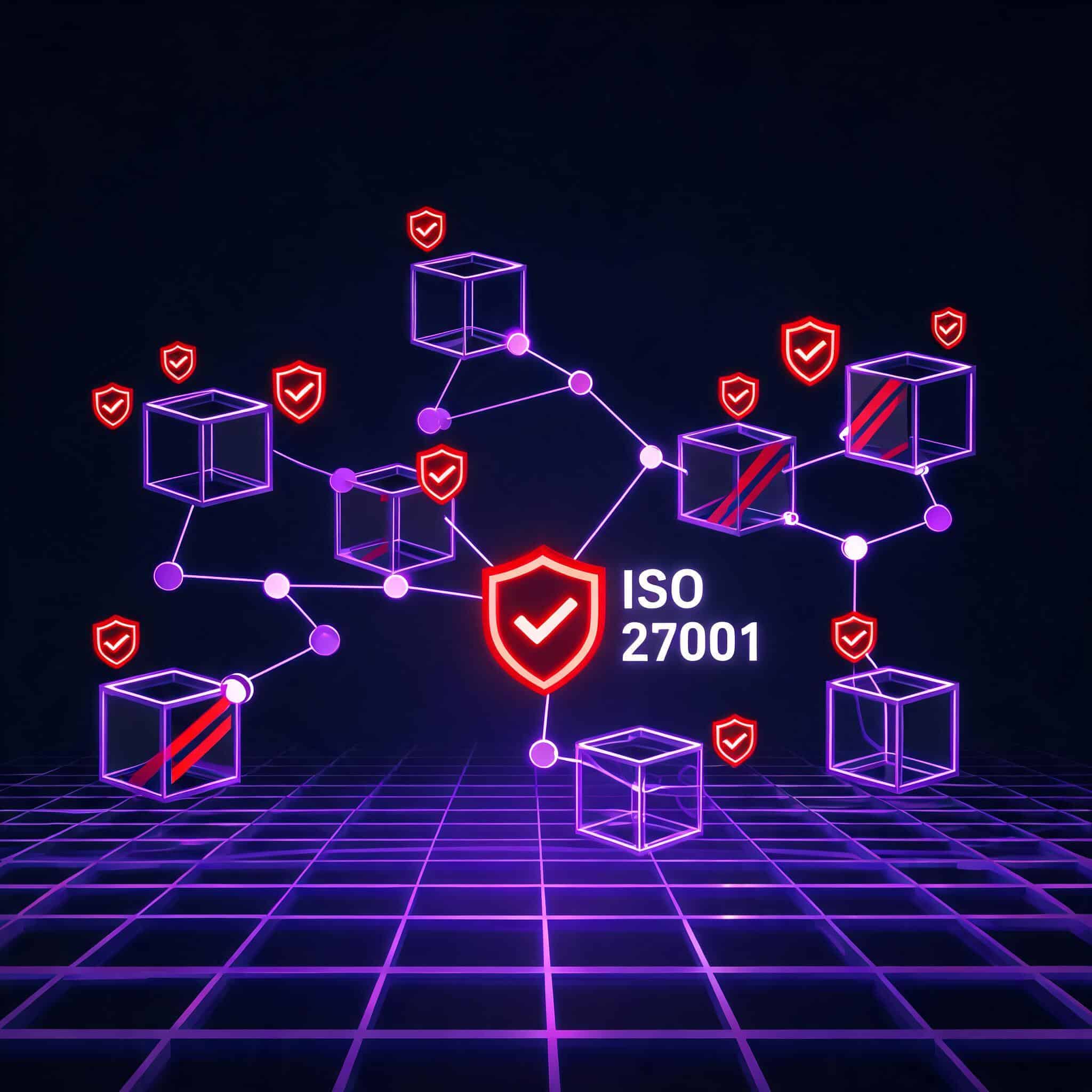
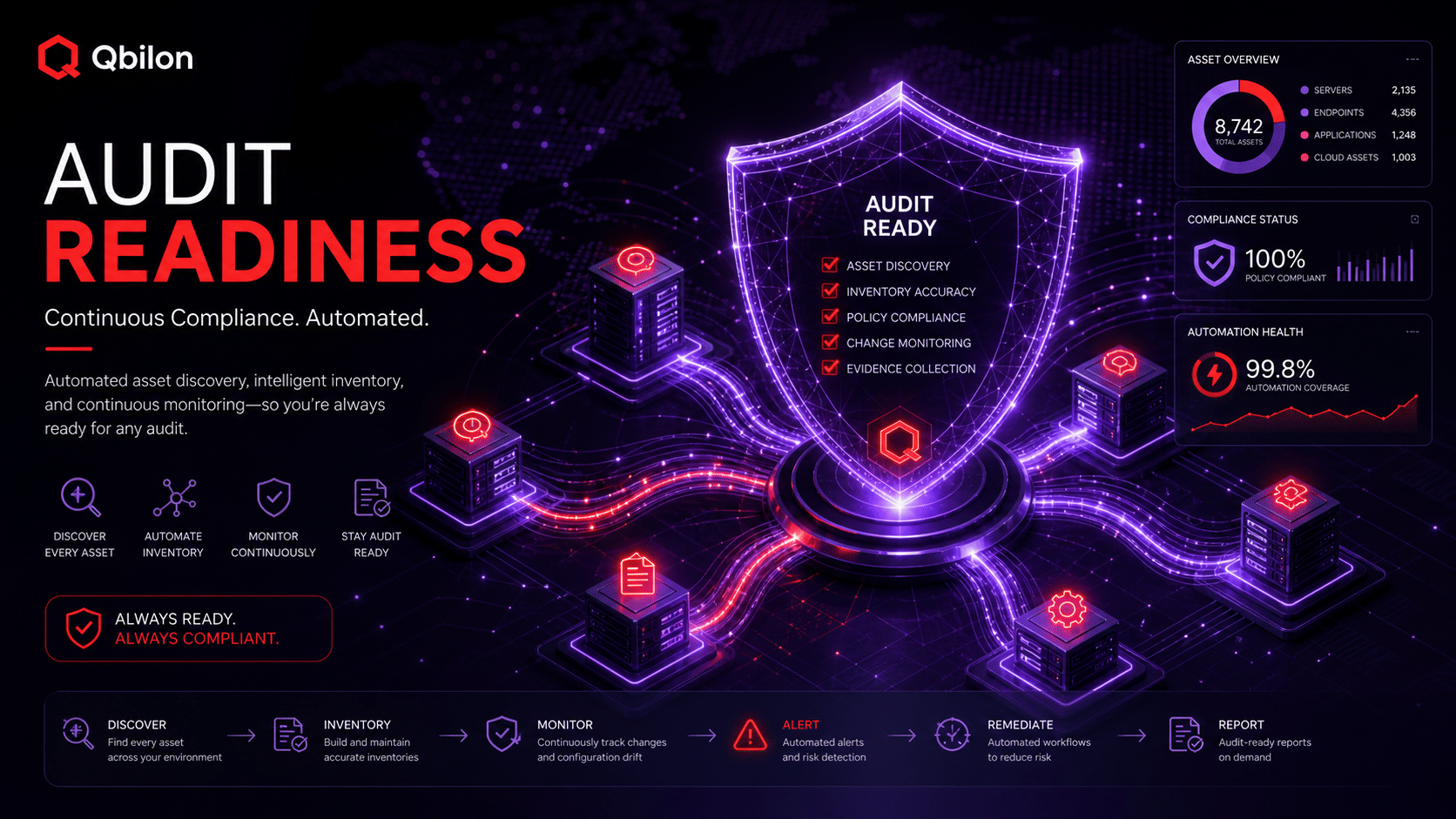
For compliance with security standards (such as ISO 27001 or BSI IT-Grundschutz) and regulations like NIS-2, it is crucial that every single one of these changes is historized. An auditor will not only ask if the server is patched today but whether it was patched promptly last year when a critical zero-day vulnerability (like the one in the Log4j library) became known.
- Manually maintaining this phase in Excel is a hopeless battle against windmills. Only a "Time Machine" function that continuously photographs and saves the state of the IT landscape can reliably document the life of an asset.
Phase 3: Offboarding & Decommissioning (The Risky Death)
This is where the most serious errors occur in practice. A server is no longer needed. The administrator shuts down the operating system or deletes the virtual machine in the hypervisor. From a technical perspective, the case is often settled. However, from an asset management and cybersecurity perspective, the problems are just beginning.
- If an asset is not cleanly and documentably "offboarded," orphaned assets or "zombie resources" are created.
Financial Risk: The virtual machine was deleted, but associated cloud storage (e.g., additional "EBS Volumes" or "Snapshots" in AWS) was not cleaned up. The company continues to pay for unused storage space.
Security Risk: A firewall rule that authorized the (now deleted) server to communicate through the network remains in place. The IP address is assigned to a new, perhaps less protected service—and suddenly this service unintentionally inherits extensive network privileges.
Compliance Risk: During audits, proof is missing as to who authorized the deletion of a system containing sensitive customer data and whether the data was destroyed ("wiped") in compliance with GDPR.
Automation Closes the Loop
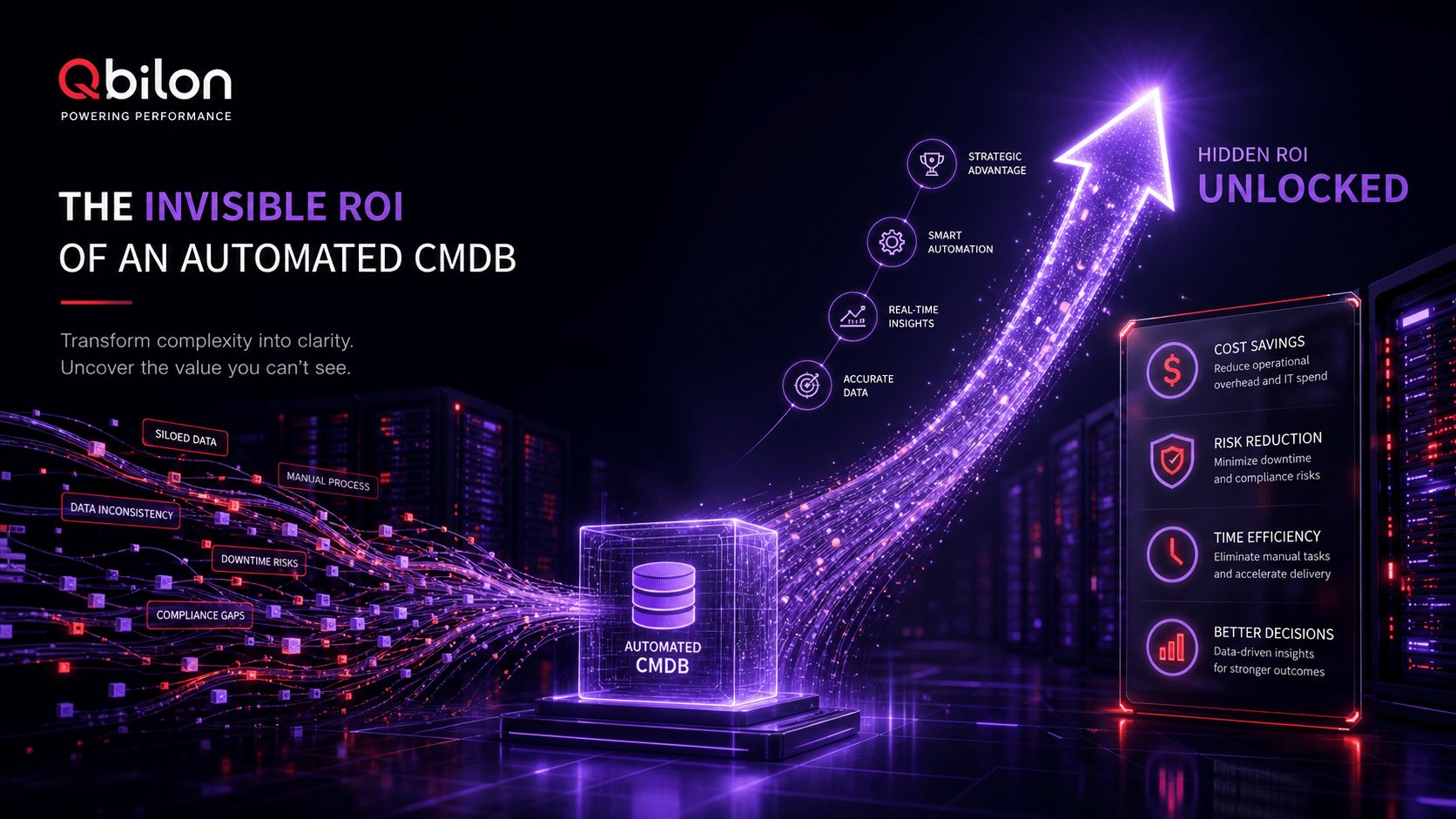
Holistic lifecycle management is simply not feasible without a central, automated data platform. The platform not only orchestrates onboarding and documents the operational phase; it is, above all, the decisive safety belt during offboarding.
- When an asset is removed from the infrastructure, the automated CMDB recognizes this immediately. It can trigger workflows: it instructs the network team to clean up old firewall rules, reminds the FinOps team to release software licenses, and documents for the next auditor with a timestamp that the system was officially decommissioned on May 12 at 2:00 PM according to all the rules of the art.
Only those who manage the entire lifecycle of their IT assets—from cradle to grave—in a transparent and automated manner truly have their infrastructure under control.