ISMS (ISO 27001) and Asset Management: An Inseparable Partnership
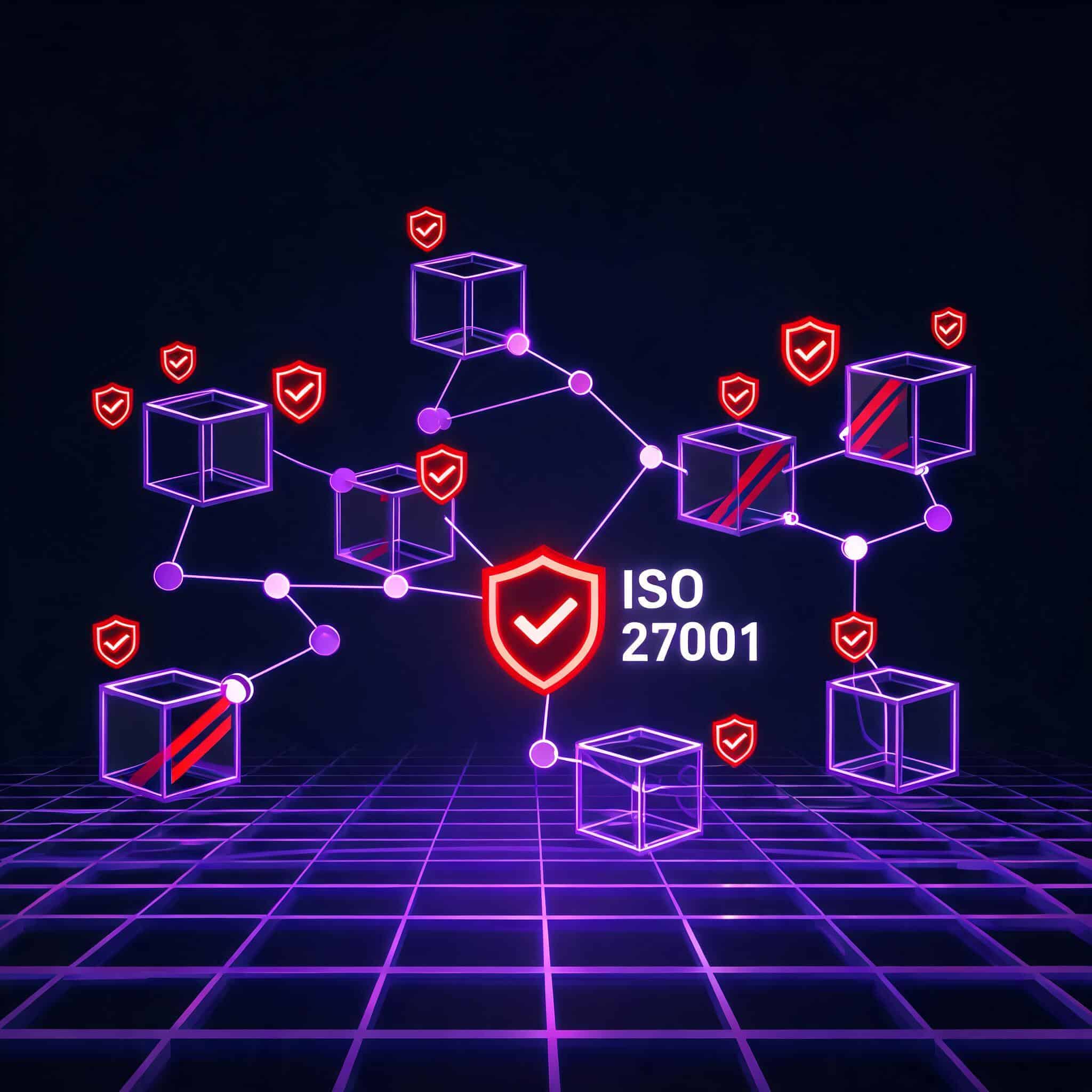
When companies decide to raise their information security to a professional, internationally recognized level, the choice almost always falls on the ISO/IEC 27001 standard. Establishing an Information Security Management System (ISMS) according to this standard is no longer just a matter of internal quality assurance for many organizations today, but often a hard requirement in tenders and supplier contracts (Supply Chain Security).
- Preparing for ISO 27001 certification is a profound process that deals with risk management, cryptography, physical Security, and personnel training. However, anyone who reads the standard closely – particularly Annex A, which contains a normative reference catalog of possible Security measures – encounters a fundamental requirement where a surprising number of projects fail in advance: Asset Management. In this article, we highlight why ISO 27001 and seamless, automated IT Asset Management form an inseparable partnership and why you can never operate effective risk management without the latter.
The Philosophy of ISO 27001: Risk-Based Action
To understand the significance of Asset Management in the ISO standard, one must know its basic philosophy. ISO 27001 does not blanketly prescribe that every company must operate a prohibitively expensive high-end firewall. Rather, it pursues a risk-based approach.
- This means: The company must identify its assets worth protecting, analyze the potential threats to these assets, and then take appropriate measures to reduce these risks to an acceptable level. This is where the logic comes full circle: How do you want to conduct a risk assessment if you don't even know which values (Assets) your company actually owns? Annex A: The Unmistakable Demand for the Inventory In the structure of ISO 27001 (both in the 2013 version and in the heavily revised 2022 update), a central area is dedicated to handling assets. The standard unmistakably demands: Inventory of assets: All assets associated with information and information-processing facilities must be identified and recorded and maintained in an Inventory. Ownership of assets: An owner (Asset Owner) must be designated for every asset in the Inventory. Acceptable use: Rules for the acceptable use of Assets must be documented.
- Auditors demand a detailed register covering hardware (Servers, laptops, IoT devices), software (applications, Cloud services, databases), and pure information (e.g., customer databases).
The Failure of Manual Asset Registers in the Audit
- When companies build an ISMS, they often try to tackle the demand for the "Asset register" using basic onboard tools. Huge Excel spreadsheets are created, which are laboriously filled by all department heads during the first weeks of the project. For the initial Audit, this Excel construct might sometimes even suffice. However, ISO 27001 demands continual improvement (Clause 10.2). At the latest during the first surveillance audit, which takes place within 12 months after the certificate is issued, the house of cards collapses. The auditors find:
The list has not been updated for months
There are Cloud instances that are running but have no documented "Asset Owner" in the list. Obsolete systems that were shut down long ago are still carried along in the risk management process.
- The result is a major non-conformity in the Audit. An ISMS built on outdated Asset data produces incorrect risk assessments and is therefore non-functional at its core. Building the Bridge: Automating the Foundation
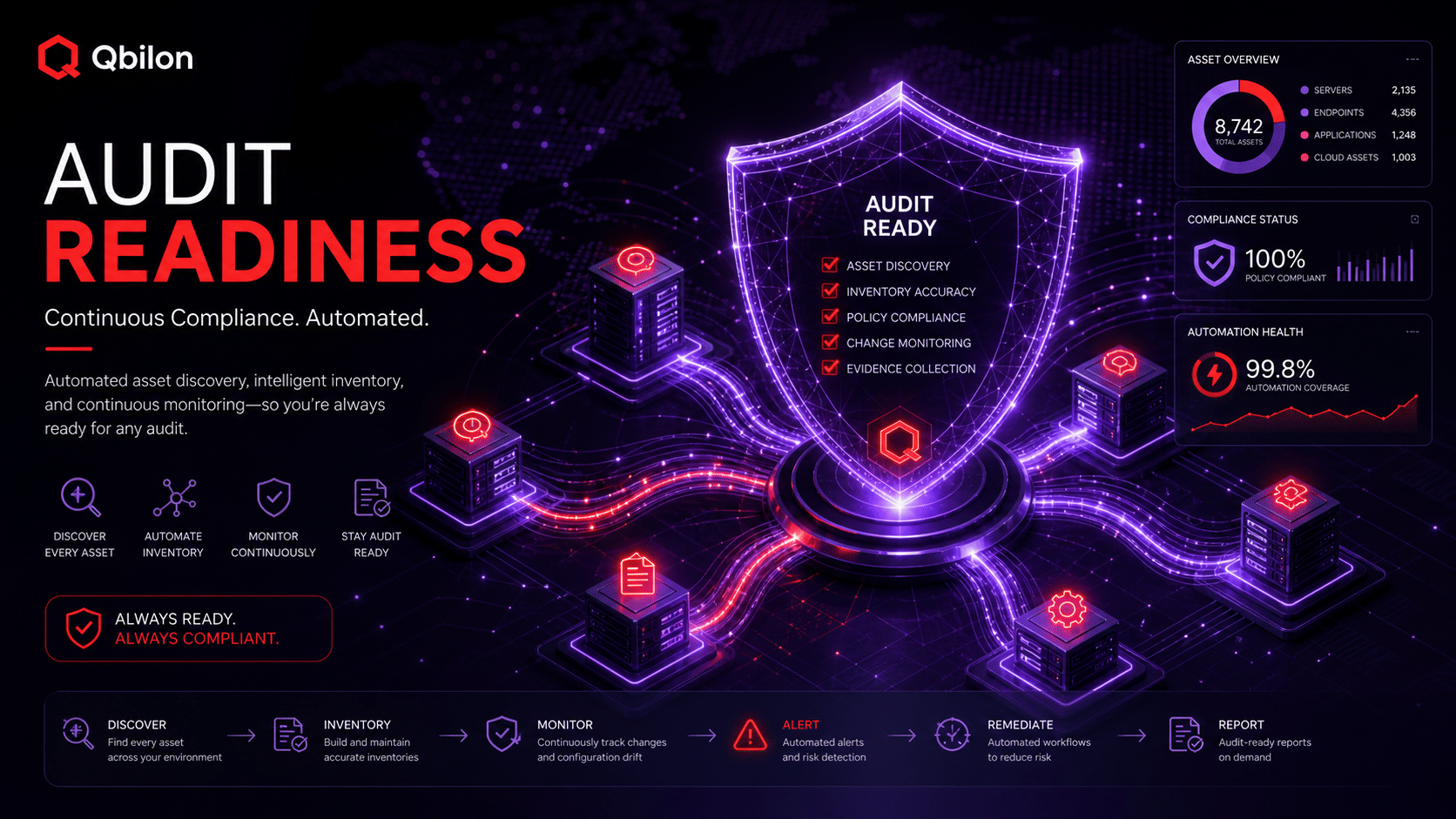
- The only sustainable way to meet the strict Asset Management requirements of ISO 27001 permanently and stress-free is radical automation. This is exactly where the synergy with modern platforms like Qbilon comes into play.
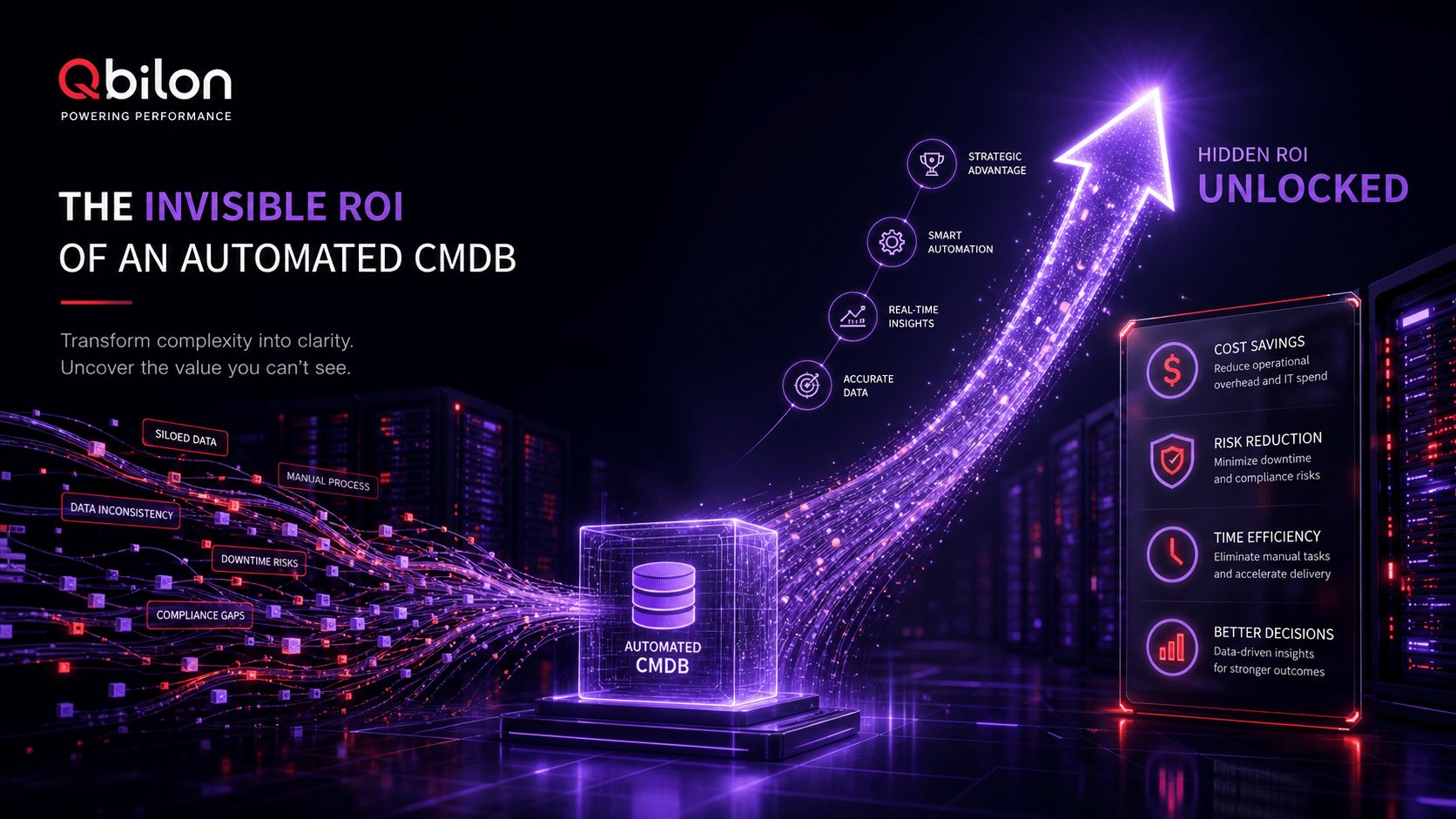
- The Living Inventory: Instead of entering data manually, an automated CMDB continuously generates the Asset Inventory itself. Through API interfaces into the IT Infrastructure, changes are captured immediately. The ISO Auditor does not see a dead table, but a real-time reflection of reality. Traceability of Ownership: The standard insists on responsibilities. Who is to blame if the Server remains unpatched? In an automated platform, Assets can be automatically assigned to the correct functional departments and Asset owners through rules (tagging in Cloud environments, Active Directory groups). This ensures there are no orphaned systems. Automating Risk Context: A modern CMDB maps dependencies. The system knows that a specific web server is connected to the database containing customer data (high protection requirement). This context is invaluable for the ISMS team as it enables immediate, data-driven risk prioritization without administrators having to manually study network diagrams.
Conclusion: The ISMS Needs Reliable Data
- ISO 27001 is not an IT project, but a management project. However, management can only steer, direct, and assess risks if it can rely on reliable data. Do not attempt to build a sophisticated information security management system on a crumbling foundation of manual spreadsheets. A complete, automated, and historized IT Asset Management system is the engine that keeps your ISMS alive, simplifies your Audits, and ultimately increases your company's Security significantly and permanently.