
BSI IT-Grundschutz: Inventory as the Foundation of Every Security Strategy
Anyone who takes information security seriously in the German-speaking world cannot avoid one particular standard: The IT-Grundschutz of the Federal Office for Security in Information Technology (BSI). Whether as preparation for an ISO 27001 certificate based on IT-Grundschutz, as a mandatory standard for federal authorities, or as a recognized reference work for KRITIS operators who must demonstrate appropriate security measures according to § 8a BSIG – the BSI compendium is considered the bible of IT security.
However, anyone who opens this heavy work (or nowadays the digital compendium) and fights their way through the 111 modules across 10 subject areas (each containing requirements at basic, standard, and core protection levels) quickly realizes: Before it comes to complex encryption algorithms, zero-trust architectures, or AI-supported threat detection, the BSI repeatedly demands a seemingly profane but decisive "Step Zero."
This step is: Inventory.
In this article, we highlight why the BSI attaches such high importance to the complete recording of all IT assets, why most organizations fail at this very foundation, and how this Herculean task can be elegantly solved through automation.
The BSI Methodology: No Security Without Visibility
The IT-Grundschutz follows a clear, structured methodology for establishing an Information Security Management System (ISMS). One of the very first steps in this process is called "Structure Analysis."
- The BSI unmistakably demands that the goal of the structure analysis is to completely record the institution under consideration and its essential business processes, applications, IT systems, rooms, and communication links (BSI Standard 200-2).
Why this vehemence? The logic behind it is strikingly simple and can be reduced to the absolute basic rule of cybersecurity: You cannot protect what you do not know.
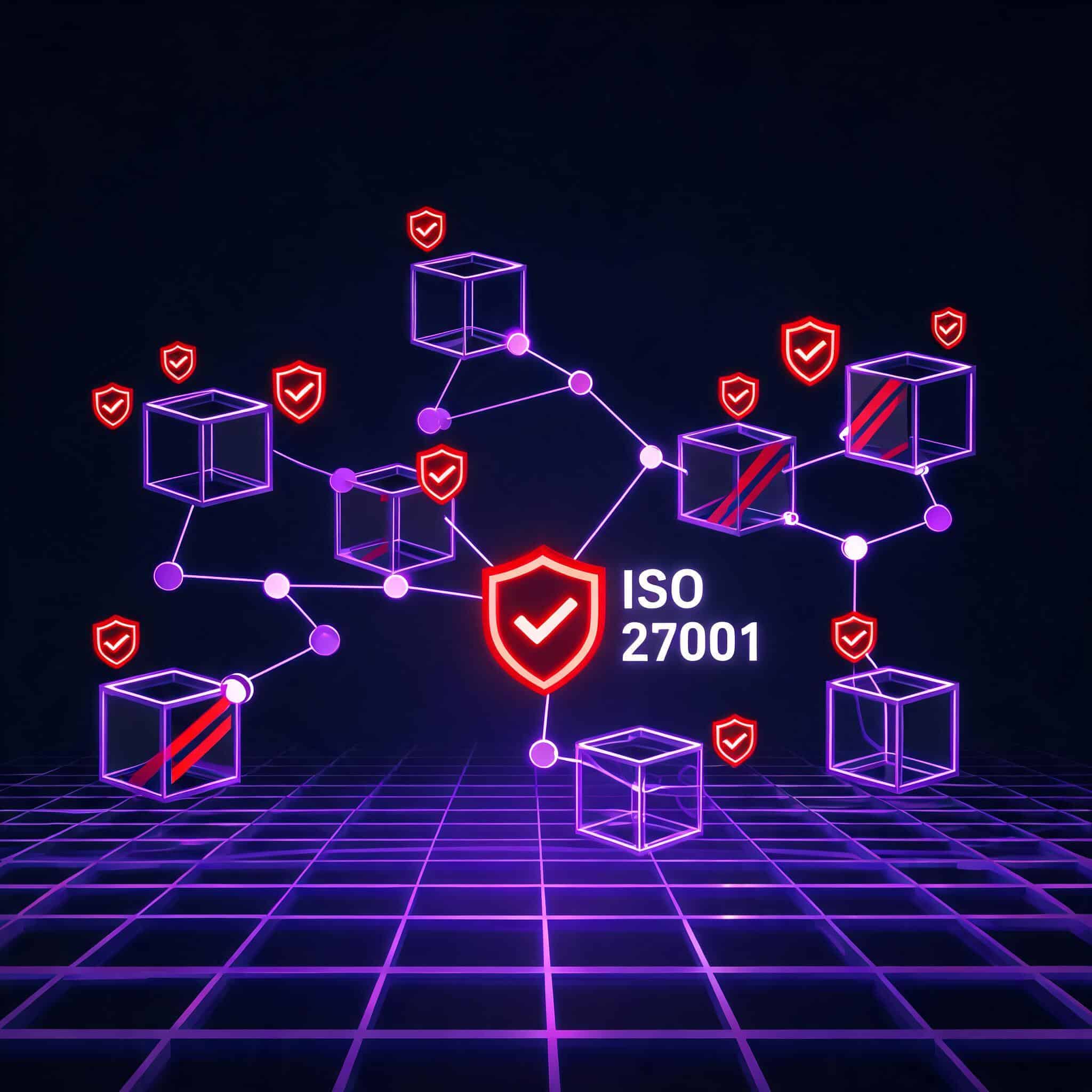
Imagine you are supposed to guard a company building. You install state-of-the-art alarm systems on the front door (your firewall) and cameras in the hallways (your network monitoring). But what you don't know: there is a small basement door that was never recorded on a blueprint because it was installed later by a contractor. That's exactly where the thieves break in.
In the IT world, this basement door is the forgotten test server in the cloud, the outdated marketing software, or the unpatched IoT device on the production floor. Without a complete Asset Inventory, you are building your entire security architecture on a foundation of sand.
Why Manual Structure Analysis Fails
In theory, the BSI's requirement sounds logical. In practice, it often causes IT managers to break out in a cold sweat. The traditional way to meet this requirement was to send around Excel lists, interview department heads, and spend months gathering data sheets.
This manual approach is fatal in today's IT landscape for three reasons:
- The data is immediately outdated: The lifecycles of IT systems have dropped drastically. While the structure analysis for the BSI Audit is still being written, developers have already deployed ten new microservices in the cloud. The list is obsolete before it is even printed.
- The blind spot of shadow IT: If you ask departments which systems they use, you only get the answers they think the IT department wants to hear. The independently booked SaaS solution for file exchange often goes unmentioned.
- Lack of context: The BSI requires not just a list of servers, but an understanding of dependencies. Which server supports the critical "invoicing" process? These multi-dimensional links can hardly be maintained manually.
The Automated Path to BSI Compliance
When BSI Grundschutz and modern IT infrastructures meet, technology is the only bridge. To meet the requirements for a complete structure analysis without tying up armies of administrators with documentation tasks, there is no way around an automated IT Asset Management (ITAM) solution.
A platform like Qbilon translates BSI requirements into automated processes
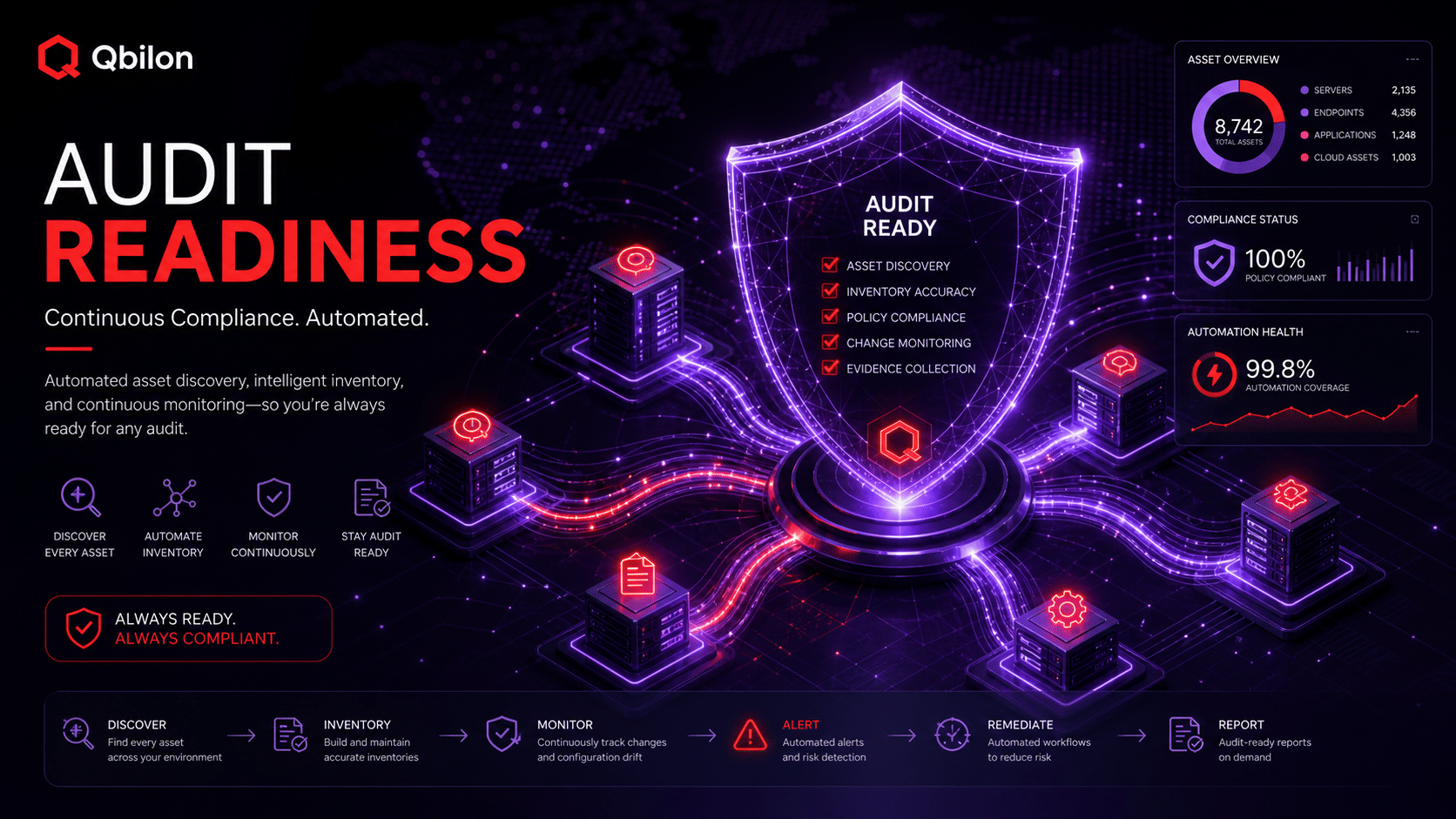
- Completeness through API integration: Instead of asking people, the system queries the truth where it originates. Qbilon connects directly to cloud providers (AWS, Azure), virtualization solutions (VMware), network scanners, and Active Directory. Every system is recorded – even the hidden basement door.
- Continuous updates: The inventory is not a snapshot for the annual audit, but a living organism that adapts to reality in real-time.
- Mapping of dependencies: The platform automatically recognizes which systems communicate with each other. This turns a flat list into a real architecture model that shows which processes would be endangered by the failure of a specific server.
From Audit Stress to Permanent Security
The audit team is at the door and demands the structure analysis according to BSI IT-Grundschutz. In the past, this meant stress, overtime, and the desperate hope that the Excel lists looked somewhat plausible.
With an automated, data-driven CMDB, this picture changes fundamentally. You open the dashboard, export the current, complete state of your entire infrastructure including all dependencies, and present it. What's more: Since the system (as discussed in previous posts) maintains historical data, you can prove that this complete inventory has been maintained throughout the entire year.
Compliance with BSI standards is not administrative harassment, but the gold standard for a resilient company. Those who automate the foundation – the inventory – lay the perfect cornerstone to build a security architecture that withstands real attacks.