The CMDB of the Future: From Static Tables to Dynamic IT Memory
When you ask IT administrators and enterprise architects about their attitude toward the Configuration Management Database (CMDB), you often get a resigned sigh. In theory, the CMDB is the undisputed heart of IT – the Single Source of Truth that knows everything: what hardware exists, what software runs on it, and how business-critical processes depend on one another. In the practice of many companies, however, the CMDB is often a constant problem child. It is expensive to maintain, chronically outdated, and no longer does justice to the extremely dynamic character of modern, Cloud-based IT landscapes. But with increasing regulation (such as NIS-2 or DORA) and rising demands for IT Sicherheit, the concept of central IT documentation is currently experiencing a much-needed renaissance. We shed light on why traditional approaches fail today and how the CMDB is transforming from a hated administrative tool into a dynamic, automated IT memory.
The Problem of "Data Decay"
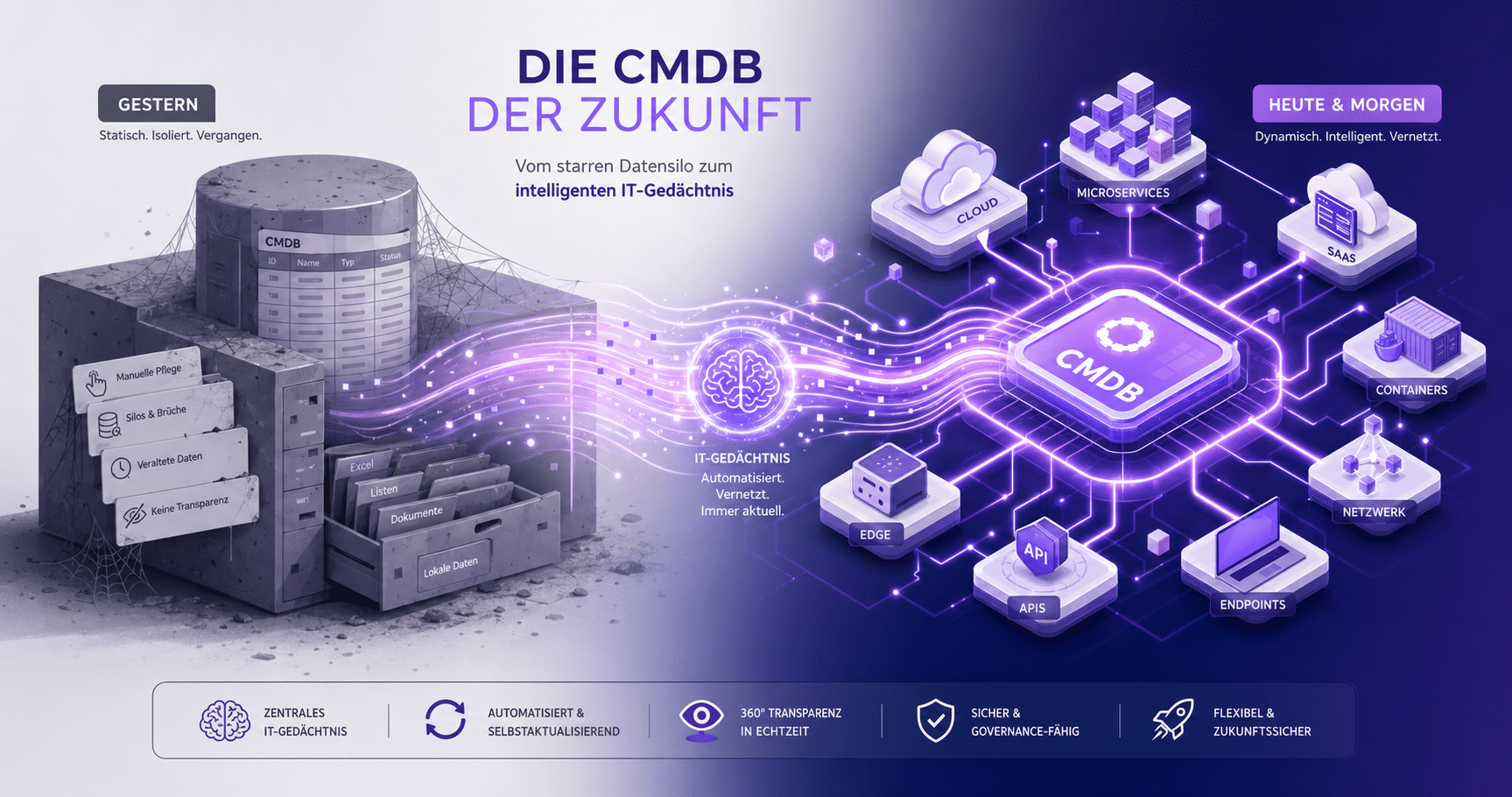
- The biggest problem with classic IT documentation is data decay. Information in a manually maintained database is only 100% reliable at the exact moment it is typed in. Just one minute later, a developer can spin up five new Cloud Servers via script or an employee can license a new SaaS application ("Shadow IT"). Reality continues to evolve, while the documentation stands still. This constant game of catch-up leads to a fatal loss of trust. When the IT operations team realizes during error analysis that the data in the CMDB is incorrect anyway, they stop using the database. A vicious cycle begins: the database is used less frequently, maintained even less as a result, and eventually deteriorates into an expensive data ruin.
Why Modern IT Forces a New Approach
Ten to fifteen years ago, when on-premises data centers clearly dominated and Infrastruktur was largely static, manual maintenance of a CMDB was still feasible with a lot of diligence. Today, we face completely different challenges: Hybrid and decentralized landscapes: IT Assets are distributed across local networks, private Clouds, public Clouds (AWS, Azure), and edge computing devices. Extreme short-livedness: In the container world (Kubernetes) and with microservices, "Assets" often exist for only minutes or hours. Capturing them manually is physically impossible. Compliance & proof obligations: Frameworks like NIS-2 demand reliable proof of how IT is structured. Auditors do not accept a database that is maintained manually on a "best effort" basis.
The Evolution: From Static to Dynamic
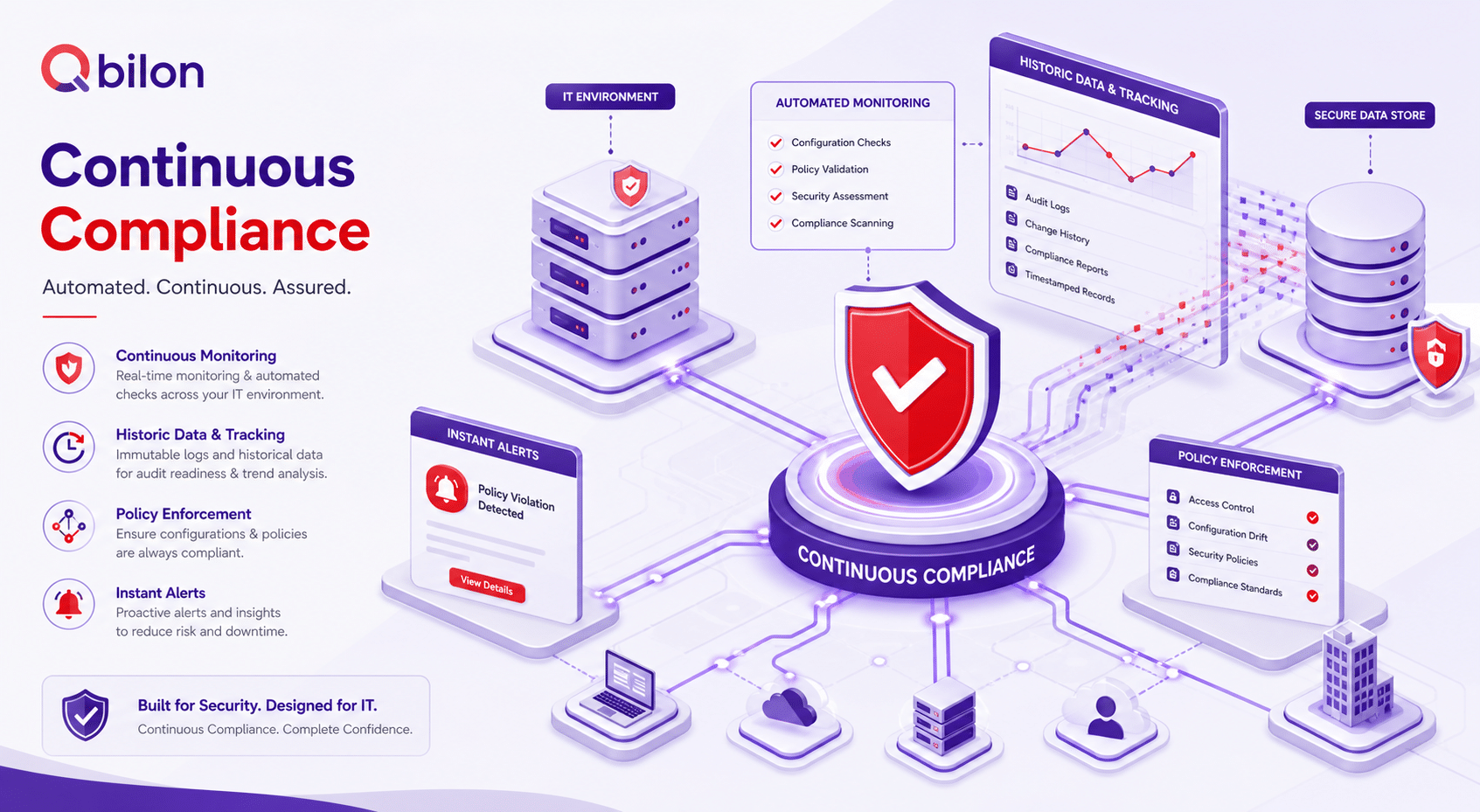
To meet these challenges, the philosophy behind IT Asset Management (ITAM) and the CMDB has fundamentally changed. The CMDB of the future is characterized by three elementary properties: Full automation through integration: The modern CMDB does not wait for a human to enter data. It retrieves it proactively. Via APIs, it integrates seamlessly into the tools that already know the truth. It pulls network data from monitoring tools, Cloud resources directly from the hypervisor, and software Inventaries from endpoint Sicherheit solutions. The CMDB turns from a data store into an intelligent data aggregator. Historization (The IT Memory): This is perhaps the most important evolutionary step. A classic CMDB only knows the "now." When an Asset changes, the old record is overwritten. A modern solution, on the other hand, historizes all states. It remembers every change, every IP change, and every software update with a timestamp. This "time machine" function is essential for reconstructing exactly what was changed before a crash (Root Cause Analysis) during IT outages, or for proving what the Infrastruktur looked like six months ago during Audits. Context-based intelligence: Raw data sheets are of little use. A future-proof solution intelligently links data to make dependencies visible. It doesn't just show that "Server X" is running, but that "Server X" is strictly necessary for the "webshop checkout" and has a critical vulnerability. Pure data points become business-critical context. Preparing for the next step: Sicherheit Anyone who has established this dynamic, historized type of IT documentation benefits not only from more efficient IT operations and relaxed Compliance Audits. They also lay the foundation for the next big stage of cybersecurity.
- When an organization automatically knows which Assets it owns, where they are located, and how they have changed over time, the leap to recognizing attack surfaces (Attack Surface Management) is not far off. Because only those who know their network in detail can effectively protect it from cyberattacks. Companies that are still trying to get a grip on Asset chaos with static tables or rigid legacy systems should urgently rethink. Switching to an automated, data-driven solution like Qbilon is no longer an option for IT excellence today – it is an absolute necessity to be able to manage IT operations of the future at all.