Budget Planning 2027: Why Asset Transparency Lowers Your IT Costs
Budget Planning 2027: Why Asset Transparency Lowers Your IT Costs
It is late November. In boardrooms and IT departments, the crucial meetings for budget planning 2027 are underway. For Chief Information Officers (CIOs) and Chief Information Security Officers (CISOs), this time is often a rhetorical gauntlet. They must explain to the Chief Financial Officer (CFO) why IT budgets must continue to grow in the face of inflation, rising cloud costs, and ever-new cyber threats (such as ransomware).
When IT executives request budget for an automated asset management platform (CMDB / CAASM) in these negotiations, they often make a tactical error: they argue almost exclusively on the topics of compliance (NIS-2) and risk mitigation (Security).
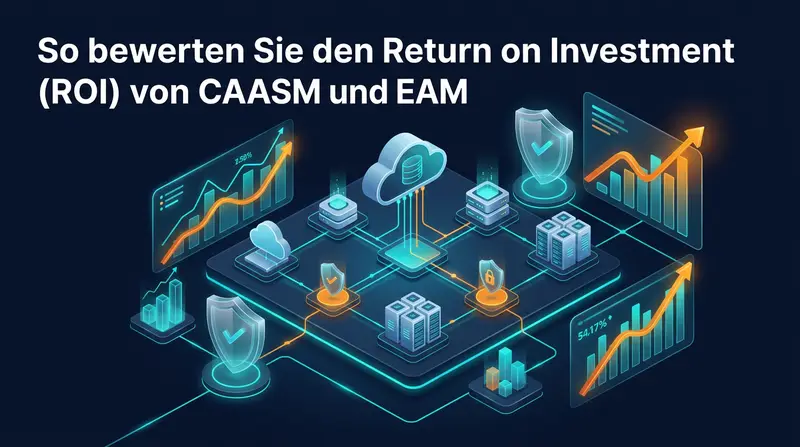
These are important arguments, but for a CFO focused on hard numbers and direct savings (ROI), they often sound like an abstract "insurance policy." In this post, we flip the argument. We show you how to position asset transparency not as a cost factor, but as a massive cost reducer, and how a platform like Qbilon often refinances its own budget as early as the first quarter.
Argument 1: The Fight Against the Cloud Cost Explosion (FinOps)
The migration to the cloud (AWS, Azure, Google Cloud) was once sold with the promise of lowering IT costs and increasing flexibility (Pay-as-you-go). However, the reality in many companies is that monthly cloud bills are exploding. The reason for this is a lack of transparency.
Developers provision powerful servers for testing with a click of a mouse, scale up databases for peak loads, or store hundreds of gigabytes of backups on expensive cloud storage. The problem: these resources are often not shut down again.
These so-called orphaned assets or "zombie servers" often cause 20 to 30 percent of total cloud spending in complex enterprise environments, according to analysts. No one is using them, but the company pays for them every minute because no one has the oversight.
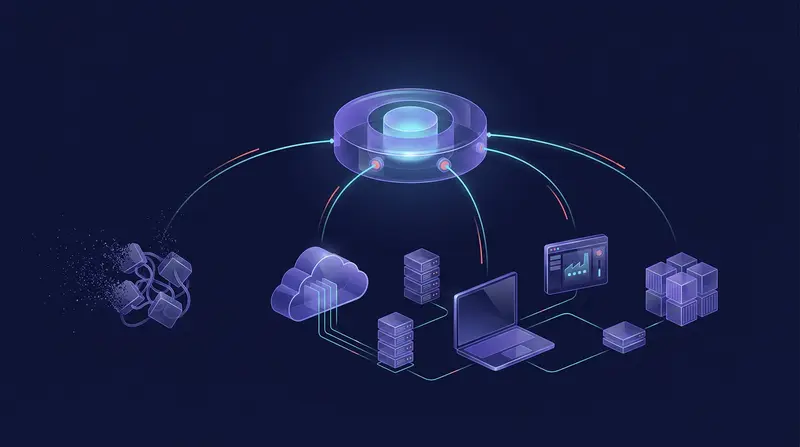
The business case for the platform: An automated CMDB connects via APIs to cloud billing and utilization data (CPU/traffic). It identifies fully automatically:
- Servers that have had CPU utilization below 1% for 30 days.
- Unattached, expensive IP addresses (Elastic IPs).
- Cloud storage volumes that are no longer attached to any active virtual machine.
By presenting this list to the CFO, you can quantify a direct, hard dollar amount that will be saved starting next month. This is the most immediate return on investment (ROI) of the entire platform.
Argument 2: Software License Optimization (SaaS and On-Premise)
The second major cost driver in IT is software (Software Asset Management). Companies often buy volume licenses for expensive applications (e.g., Microsoft Visio, specialized CAD software, or Salesforce accounts for the entire sales team).
When employees leave the company (offboarding) or move to another department where they no longer need the tool, these licenses are almost never consistently returned in manually managed IT environments. The subscriptions continue unnoticed.
The business case for the platform: The platform reconciles purchasing data (the paid licenses) with actual usage data (login activities in Active Directory or installed software on laptops). The dashboard immediately shows: "We are paying for 500 licenses of Software X, but only 280 licenses have been actively used in the last 90 days." Canceling these 220 surplus licenses at the next contract cycle leads to immediate, massive budget savings.
Argument 3: The Hidden Personnel Costs (Audit Preparation)
This point is often overlooked in budget discussions because it does not appear directly on a third-party vendor's invoice: the tying up of highly paid specialists (FTEs).
When your company shifts into "audit mode" (due to NIS-2 or ISO 27001) and network architects and security analysts have to spend four weeks searching for historical evidence in Excel spreadsheets, you are burning money. These experts cost the company hundreds of dollars per hour. During this time, they are not driving innovation and are not closing security gaps.
The business case for the platform: Through continuous compliance and "push-button evidence" (generation of historical evidence at the touch of a button), the platform reduces the manual effort for audits by up to 80 percent. You need to purchase less external consultant budget and can put your own expensive specialists back to work on value-adding tasks.
Conclusion: Transparency Pays for Itself
When you fight for an asset management or CAASM platform in the 2027 budget meeting, do not act as a pure risk manager. Act as an optimizer.
A blind network is an inefficient, extremely expensive network. Those who do not know their assets pay for ghost servers, waste money on software vendors for unused licenses, and burn their best employees' working time in administrative Excel hells. An automated, API-driven "Single Source of Truth" is not a pure security investment – it is the most powerful FinOps tool ever placed on your CFO's desk.