API Security in the CAASM Era
API Security in the CAASM Era
When we talked about inventorying IT assets in previous posts, most readers probably had physical or virtual objects in mind: a database server, an employee laptop, a firewall, or a cloud instance. This is perfectly correct, but in the architecture of modern enterprise software in 2026, this perspective is no longer sufficient.
The heart of digital transformation—the glue that holds cloud services, microservices, mobile apps, and partner networks together—is invisible. These are Application Programming Interfaces (APIs).
APIs enable smartphone games to talk to payment providers, your ERP system to retrieve supplier data, and cloud systems to scale. However, it is precisely this immense importance and ubiquity that makes APIs the preferred and most dangerous target for hackers. In this post, we shed light on why API security is often the "neglected stepchild" of IT departments and why you urgently need to include your APIs as critical "Cyber Assets" in your Cyber Asset Attack Surface Management (CAASM) strategy.
The API Wildgrowth (The Invisible Attack Surface)
Why are APIs such a nightmare for security teams? The problem is threefold:
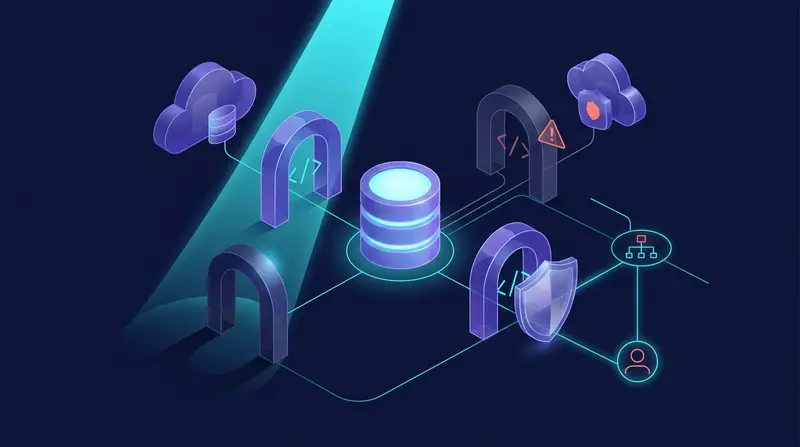
- Lack of Visibility (Shadow APIs) Developers love APIs because they extremely accelerate programming. Often, new interfaces (endpoints) are hastily programmed and put online for new functions or temporary tests. The problem: these interfaces are rarely documented centrally. The result is "Shadow APIs." The security team knows nothing of their existence. If an API is unknown, it is neither scanned for vulnerabilities nor protected by a Web Application Firewall (WAF). It is an unguarded gate directly into your database.
- Forgotten Versions (Zombie APIs) A development team builds "API Version 2" with new, stricter security mechanisms (authentication) and releases it. However, the old "API Version 1," which still uses outdated security standards, is not shut down (decommissioned) "in case an old client still needs to access it." These "Zombie APIs" often rot away unnoticed for years. An attacker finds Version 1 and exploits the weak security to siphon off massive amounts of data (Data Exfiltration), while the security team falsely believes Version 2 is securing everything.
- B2B Connectivity (Supply Chain Risk) APIs are the doors for external partners. When you give a third-party provider an API key to retrieve inventory data, you are trusting their level of security. If the partner is hacked and the API key falls into the wrong hands, the attacker has direct access to your internal systems (Supply Chain Attack).
How CAASM Ends the API Chaos
To secure APIs, you must manage them with the same operational rigor as physical servers. The fundamental rule "You can't protect what you can't see" applies here especially.
This is where Cyber Asset Attack Surface Management (CAASM) closes the critical gap. CAASM does not view APIs as abstract code, but inventories them as hard, monitored cyber assets in the central CMDB.
- API Discovery through Correlation A platform like Qbilon detects Shadow APIs and Zombie APIs by analyzing network traffic, firewall logs, and cloud gateways. If the system recognizes that an IP address in your network is regularly sending structured data to external sources, but this interface is not documented in the official architecture portfolio (EAM), CAASM immediately sounds an alarm. The blind spot is illuminated.
- Dependency Mapping for APIs The true danger of an API lies in what it accesses. The asset platform maps these dependencies (Dependency Mapping). The security team sees on the dashboard: "The newly discovered shadow API communicates directly with the SQL database containing customer credit card information." This context-based insight immediately elevates the priority of closing this API to the highest level (risk-based prioritization).
- Lifecycle and Owner Management Like every server, every API needs an owner (Asset Owner) and a lifecycle. CAASM enforces this documentation. If the developer who wrote the API leaves the company, the system recognizes this via Active Directory and automatically requests the assignment of a new responsible person.
Conclusion: Treat APIs like Open Doors
The time when APIs could fly under the radar of central IT security as mere developer tools is over. In the era of microservices, an unsecured API is just as dangerous as missing antivirus protection on a domain controller.
Expand your understanding of IT inventory. A modern CAASM strategy brings light into the API wildgrowth. It uncovers Zombie and Shadow APIs, links them to the underlying business risks, and forces your organization to treat interfaces for what they truly are: open doors into your company that you must know and monitor 24/7.